
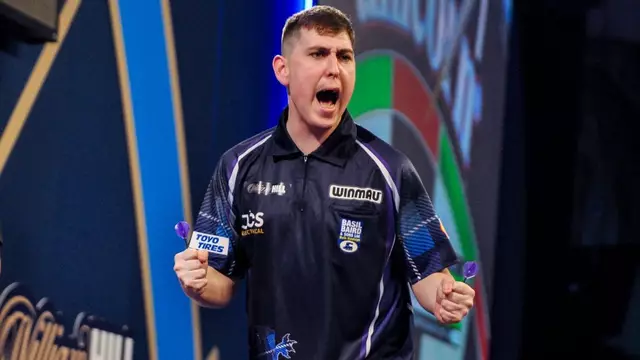
In the glittering yet unforgiving world of professional darts, where the sharp crack of a dart piercing the wire echoes like a heartbeat in the arena, few stories cut as deep as that of a player forced to the sidelines. Imagine stepping up to the oche, the world at your feet, only to watch it all slip away—not through a rival’s superior throw, but through battles fought far from the spotlight. This is the raw, unfiltered tale of one darts star’s harrowing disappearance from the PDC circuit, a saga marked by personal demons, quiet resilience, and a desperate bid for redemption. At 39, with a career spanning over two decades, this veteran—once a beacon of consistency on the tour—found himself adrift, his Tour Card revoked in the brutal cull following the 2025 World Darts Championship. But behind the headlines of lost privileges lies a heartbreaking truth: a 21-month exile born not of apathy, but of an invisible war against his own mind.
The darting landscape is a meritocracy of the fiercest kind, where 128 Tour Cards grant access to the elite echelons—the glittering Pro Tours, the high-stakes majors, the roar of Ally Pally. Lose your spot in the top 64 of the Order of Merit, and you’re cast into the wilderness, relegated to the grueling Q-School qualifiers or the secondary circuits that feel more like survival than sport. In early 2025, after a season plagued by inconsistency and mounting pressure, this seasoned campaigner tumbled out of contention. His final professional match was a forgettable affair in the Players Championship, a low-average slog that ended in defeat, sealing his fate. Whispers rippled through the community: Where had the fire gone? Why the sudden vanishing act from tournaments that once defined his calendar? Fans, sponsors, and fellow pros speculated—burnout, perhaps, or a dip in form. But the reality, revealed in a raw outpouring months later, was far more shattering.
It started subtly, as these things often do in a sport that demands unflinching focus. The endless travel, the pressure-cooker atmosphere of weekly events, the isolation of hotel rooms far from home—it all conspired to amplify the cracks. “After 20+ years I feel I need a break from the professional circuit for now,” he confessed in a poignant social media post from September 2023, a message that now reads like a prelude to deeper turmoil. That break stretched into oblivion, a self-imposed sabbatical that ballooned into 21 months of absence. Tournaments came and went—the electric buzz of the Premier League, the nail-biting drama of the World Grand Prix—yet he was nowhere to be seen. No practice sessions streamed online, no cameos in the crowd. He’d “disappeared,” as the headlines would later dub it, leaving a void that loyal supporters filled with concern rather than criticism.
The heartbreaking reason? Mental health—a silent thief that steals not just games, but the will to step up at all. In the high-octane world of darts, where every throw is a psychological tightrope, admitting vulnerability is akin to handing your opponent a loaded gun. Yet, in a moment of raw honesty, he laid it bare: “I’ve taken 21 months off the PDC circuit for my own personal reasons hence why I aren’t playing at this year’s world championships.” Those words, simple on the surface, carry the weight of unspoken anguish. The “personal reasons” encompassed therapy sessions in the dead of night, battles with anxiety that turned the oche into an enemy, and a profound exhaustion that no amount of rest could mend. Darts, for all its precision, is a mental marathon; one errant thought can derail a 180. For him, the circuit had become a trigger, each flight to a new venue dredging up waves of doubt. “Dear all, in particular my fans, I feel that your loyalty deserves an explanation for my absence from tournaments,” he wrote, his tone laced with gratitude and guilt. It was a clarion call from the shadows, reminding the darts fraternity that behind every average and checkout lurks a human story.
This isn’t just one man’s lament; it’s a mirror to the sport’s underbelly. The PDC Tour, with its relentless schedule—dozens of events across continents—extracts a toll that’s only recently entering the conversation. High-profile exits like his underscore a growing crisis: burnout among veterans, the pressure on young guns like Luke Littler to sustain meteoric rises, and the stigma that still clings to seeking help. Sponsors praise the grit, fans chant for the glory, but few dwell on the cost. His hiatus wasn’t idleness; it was incubation. Away from the glare, he rebuilt—family walks in the crisp English countryside, quiet hours at the board rediscovering joy rather than obligation, consultations with counselors who specialized in athlete welfare. “Massive thanks for the support from my fans & sponsors. Also, I’d like to thank @OfficialPDC @PDPA–darts for the opportunity and last but not least my family,” he added in that pivotal post, a nod to the anchors that kept him afloat.
Now, as December 2025 chills the air, the comeback trail beckons with Q-School looming like a gauntlet. Held in the stark halls of Milton Keynes for UK hopefuls, it’s a four-day crucible where dreams are forged or shattered. He’ll line up against a field swollen with the fallen: former world champions nursing wounds, nine-dart legends like William Borland chasing echoes of past glory, and hungry newcomers eyeing the scraps. The stakes? A two-year Tour Card, the ticket back to the big leagues. But for him, it’s more than reinstatement—it’s reclamation. At 39, time is the ultimate adversary; peers like Michael van Gerwen dominate with surgical averages, while prodigies threaten to eclipse legacies overnight. Yet his experience is his edge: seven PDC titles, deep runs in majors, a career-high ranking that once whispered “contender.” If he navigates the qualifiers—surviving the First Stage qualifiers and battling through the Final Stage—he could return not as a shadow, but a sage, mentoring the next wave on the perils of the grind.
The darts world watches with bated breath, a mix of empathy and anticipation. Tributes have poured in from unlikely corners—rivals who’ve shared their own scars, commentators who’ve lauded his sportsmanship. One pro summed it up: “He’s a warrior off the board as much as on it.” His story humanizes the tungsten titans, proving that vulnerability isn’t weakness but the forge of true strength. As Ally Pally prepares for its seasonal spectacle, with Littler defending his crown and Humphries lurking as eternal foe, this absent star’s narrative adds poignant depth. Will he hurl his way back into the fray, defying the odds with a vintage checkout? Or will the oche remain a distant memory? Whatever unfolds, his “disappearance” has sparked vital dialogue: mental health resources on the tour, mandatory wellness checks, a shift from glorifying the grind to safeguarding the grinder.
In the end, darts isn’t just about the bullseye—it’s about the heart behind the throw. This veteran’s odyssey, from blackout to breakthrough, reminds us that even in a game of inches, the greatest victories are won in the soul. As he sharpens his arrows in quiet determination, the faithful hold out hope: the board awaits, and so does redemption.
Leave a Reply