
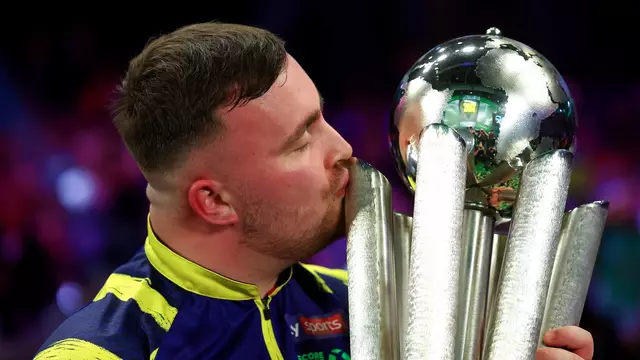
In the vibrant world of modern sports, few have experienced such a meteoric rise as darts. Today, it’s a spectacle of precision, passion, and high-stakes drama, drawing millions of viewers and filling arenas with cheering fans. At the heart of this surge is an 18-year-old prodigy named Luke Littler, a two-time world champion whose exploits have redefined the game. Fresh off retaining his title at the recent World Darts Championship, Littler pocketed a staggering £1 million from a record £5 million prize pool, captivating audiences worldwide. His journey began early; at just 12, he inked a deal with Target Darts, which has now ballooned into a groundbreaking £20 million contract. The buzz is palpable—next year’s championship at London’s iconic Alexandra Palace is set to expand into a larger venue to accommodate the swelling crowds eager to witness the oche magic. But this thriving scene masks a turbulent past. Darts, now a cornerstone of British pub culture and professional athletics, teetered on the brink of extinction in the UK, nearly outlawed before a pivotal court decision turned the tide.
Flash back to 1908, an era when public houses were hubs of social life, but strict laws governed what could unfold within their walls. In Leeds, a determined landlord named Jim Garside found himself in hot water. He was hauled before the local magistrates for permitting darts to be played at his establishment, the Adelphi Inn. The charge? Darts was classified as a “game of chance,” a form of gambling strictly prohibited in such venues. Magistrates argued that success in darts relied purely on luck, with no real skill involved—just random tosses at a board that could easily lead to illicit betting. This perspective threatened to erase darts from the cultural landscape, confining it to the shadows or banning it outright.
Garside, however, was no pushover. He mounted a spirited defense, convinced that darts demanded accuracy, focus, and technique far beyond mere fortune. To prove his point, he summoned the finest player he knew: William “Bigfoot” Annakin, a local darts maestro renowned for his unerring aim. The courtroom transformed into an impromptu arena as a dartboard was erected. Annakin was challenged to demonstrate the game’s skillful nature by hurling three darts into the 20 section—a feat he accomplished with effortless precision. The magistrates, intrigued yet skeptical, were then invited to match his throws. Unfamiliar with the nuances of grip, stance, and release, they floundered, their darts veering wildly off target. This live exhibition shattered the illusion of chance; the judges conceded that darts indeed required genuine ability. The case was dismissed, marking a landmark victory that safeguarded the sport’s future. Without this ruling, darts might have faded into obscurity, never evolving into the professional powerhouse it is today.
Yet, the battle was far from over. In the 1930s, darts faced renewed scrutiny and outright prohibitions in several UK cities, as authorities grappled with its perceived societal ills. In Huddersfield, it was banned on health grounds, with officials worried about the physical strain or unhygienic conditions in crowded pubs. Liverpool’s magistrates went further, prohibiting the game because they believed it encouraged “drunkenness,” luring patrons to linger longer over pints and potentially spiraling into excess. Glasgow echoed these concerns, outlawing darts to prevent it from drawing young people into licensed premises, where they might be exposed to alcohol and rowdy behavior. These bans reflected a broader moral panic, viewing darts not as harmless recreation but as a gateway to vice. In Glasgow, the Burgh Licensing Court even extended restrictions to “all kinds of games,” arguing they fostered intemperance.
Despite these setbacks, darts’ resilience shone through. The clamor for standardization grew, leading to the formation of the National Darts Association, which established official rules and organized competitions. The inaugural News of the World Individual Darts Championship in the 1927/28 season drew an impressive 1,010 entrants in London alone, signaling budding popularity. Participation swelled through the 1930s, with regional expansions drawing even more enthusiasts. World War II proved a turning point; servicemen and women stationed across the globe carried their love for darts with them, spreading the game far and wide. Upon returning home, they helped lift the bans, integrating darts back into everyday life. Pubs once again echoed with the satisfying thud of darts hitting cork, fostering camaraderie and friendly rivalries.
This historical saga underscores darts’ transformation from a beleaguered pub pastime to a global phenomenon. The sport’s early brushes with prohibition honed its identity, emphasizing skill over serendipity—a distinction that paved the way for professional leagues like the Professional Darts Corporation. Today, as Littler dazzles on the world stage, commanding the spotlight with his youthful flair and unmatched talent, it’s hard to imagine a UK without darts. His achievements not only boost viewership but also inspire a new generation, ensuring the game’s legacy endures. From the tense courtroom in Leeds to the roaring crowds at Ally Pally, darts’ story is one of perseverance, proving that sometimes, a well-aimed throw can change everything. The sport’s journey reminds us that what starts as a simple game can evolve into something extraordinary, captivating hearts and minds across generations.
Leave a Reply