
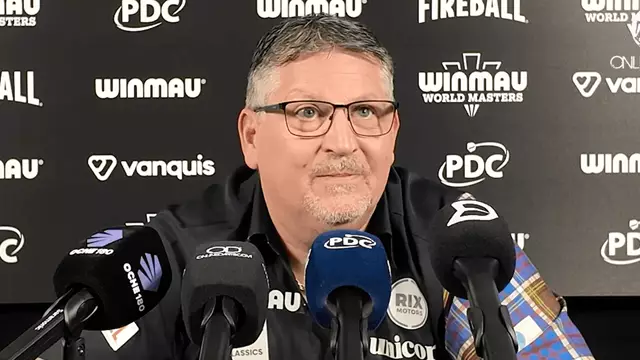
In a moment that quickly became one of the talking points of the World Masters press interactions, two‑time world darts champion Gary Anderson didn’t hold back when asked a question about whether he had been invited to play in the recent Saudi Arabia Darts Masters. Known for his forthright nature and unfiltered opinions, the 55‑year‑old Scot’s response was as sharp as his nearest‑the‑bullseye finish.
Anderson, who recently competed in the World Masters tournament — where he edged past Niels Zonneveld before bowing out in a thrilling match against James Wade — was fielding questions from reporters when attention turned to the sport’s expanding international tour. Darts events in Bahrain and Riyadh have been among the most talked‑about fixtures on this year’s World Series schedule, attracting major names and offering both lucrative prize money and global exposure.
When a journalist asked whether he had received an invite to the Saudi Arabia Masters — a tournament that features many of the sport’s top players — Anderson’s reaction was immediate and characteristically blunt. Instead of simply confirming yes or no, he turned the question around with a rhetorical one of his own: “Is it more than an hour on a plane? There’s your answer then.” The implication was clear — the long‑haul travel required for Middle Eastern events had very little appeal to him, and he wasn’t afraid to say it.
Anderson’s reply resonated widely not just because it answered the question, but because it encapsulated how his priorities have shifted in recent years. While he remains one of the world’s highest‑ranked players — sitting comfortably inside the top tier of global standings — he’s also openly vocal about what he wants out of the later stages of his career. He’s expressed in other interviews that he no longer watches darts when he isn’t competing, a startling revelation for a professional at his level. When asked whether he followed the sport on TV or tracked events outside his own schedule, Anderson admitted he doesn’t — and, even more shockingly to some fans, that he simply “doesn’t give two monkeys” about those broadcasts.
The candid admission struck a chord because it comes from someone who has been one of darts’ most consistent figures over decades. He’s admitted in earlier conversations that the packed professional calendar — with international stops, week‑after‑week travel, and the relentless rhythm of Players Championships and tour events — isn’t something he wants to be caught up in any more. In fact, he’s publicly said that lengthy commitments like the Premier League, which spans many weeks of travel and play, are not for him, highlighting the physical and mental toll such schedules can take even on seasoned champions.
It’s this perspective that underpins his stance on events like the Saudi Masters. For many players, those tournaments represent exciting opportunities — chances to compete in new markets, earn significant bonuses, and showcase the sport on a global stage. For Anderson, the allure doesn’t lie in the destination or prize money, but in being selective about where and when he steps onto the oche.
Despite tough competition and a schedule that some describe as brutal, Anderson continues to perform at a high level. His recent run at the Masters showed flashes of his trademark scoring power and competitive fire, even if he didn’t go all the way. Off the board, his personality continues to generate headlines — whether it’s his blunt dismissal of influencer culture in darts, his thoughts on burnout and travel, or his refreshingly honest responses to media questions.
Ultimately, Anderson’s reaction to the Saudi Masters invite question didn’t just answer a reporter’s query — it revealed a lot about where the two‑time world champion is in his career. He’s unapologetic, candid, and focused on doing what suits him best at this stage in his life. And, as always, he keeps fans talking every time he steps up to the line.
Leave a Reply