
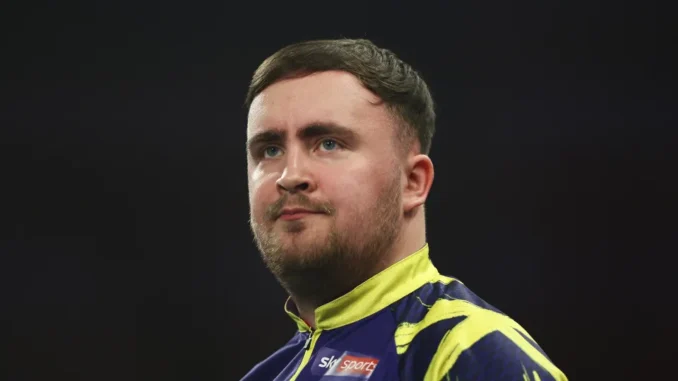
The electrifying rise of Luke Littler, the teenage sensation known as “The Nuke,” has captivated the darts world since his breakthrough. As the current world number one and a back-to-back world champion, expectations were sky-high heading into the 2026 Premier League Darts campaign. Yet, after the first four nights of intense competition, the young star finds himself in uncharted territory: struggling to find his rhythm and sitting seventh in the standings with just four points from one match win.
The Premier League format is unforgiving, featuring a rotating cast of top players battling across various venues, with points awarded for wins and bonuses for nightly triumphs. Littler, who has dominated recent majors and even claimed early European Tour silverware this season, has won only once across his opening fixtures. His results paint a picture of inconsistency: a 6-4 quarterfinal loss to Gian van Veen on night one in Newcastle, another defeat in Antwerp, a heavy 6-1 semifinal hammering by Jonny Clayton in Glasgow (after a bye due to Michael van Gerwen’s absence), and most recently, a 6-3 quarterfinal exit to the same Clayton in Belfast.
In Belfast, the atmosphere turned particularly hostile. The crowd’s boos and raucous interruptions visibly affected the 19-year-old. At one point during the match, Littler paused mid-throw, turning to gesture for the audience to quiet down after nailing a impressive 112 checkout in the eighth leg. Despite flashes of brilliance, he couldn’t overcome the pressure, falling 6-3 to Clayton, who has proven a tough matchup lately.
Former professional Matt Edgar has pinpointed what he believes could be Littler’s Achilles’ heel in these high-stakes, crowd-fueled environments. Edgar observed that the boos from partisan or hostile crowds appear to disrupt the youngster’s focus more than opponents’ play. “He hasn’t been successful in places where this has happened,” Edgar noted. “Have we potentially seen his bit of kryptonite here at this moment in his career — not able to deal with that interaction, potentially?”
This vulnerability to crowd hostility marks a stark contrast to Littler’s usual composure under pressure. In quieter or more neutral settings, he has routinely delivered high averages and clutch finishes that have earned him comparisons to legends. But in raucous Premier League nights—especially away from supportive home crowds—the external noise seems to throw off his rhythm. Edgar suggested this could be a developmental phase for the still-teenage prodigy, who is navigating the demands of elite-level darts while dealing with the intense scrutiny and expectations that come with his rapid ascent.
The Premier League table reflects the toll. Littler trails leaders like Jonny Clayton, Gerwyn Price, and others who have capitalized on nightly wins. Stephen Bunting claimed night four in Belfast with a 6-2 final victory over Gian van Veen, while Josh Rock thrilled the home fans with a spectacular nine-darter. Meanwhile, Littler and fellow star Luke Humphries have yet to secure a nightly title this season, adding to the narrative of a campaign where the young champion is playing catch-up.
Despite the setbacks, there’s no doubting Littler’s talent. His recent European Tour success shows the world-beating form is still there. As the tour moves to Cardiff for night five and beyond—heading to venues like Nottingham, Dublin, and Berlin—the question lingers: can Littler adapt to the rowdy atmospheres and silence the doubters? Or will hostile crowds continue to expose this emerging weakness?
For now, the darts world watches closely. The boy wonder who once seemed unstoppable is facing his first real test of resilience in the Premier League spotlight. How he responds could define not just this season, but his long-term legacy in the sport. With plenty of nights remaining and his undeniable skill, few would bet against a resurgence—but addressing this “kryptonite” will be key to reclaiming his throne at the oche.
Leave a Reply