
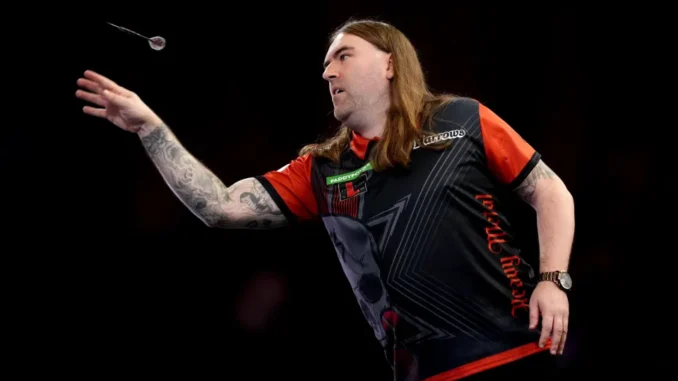
In the high-stakes arena of professional darts, where every arrow counts and the roar of the crowd can turn a whisper into a thunderclap, few moments capture the sport’s raw humanity quite like a player’s abrupt withdrawal. This week, the darts world was left buzzing after World No. 20 sensation Damon Heta, the Australian powerhouse known for his electrifying checkouts and unflappable demeanor under pressure, delivered a response so refreshingly blunt it bordered on revolutionary. Pulling out of a key tournament on the PDC calendar, Heta didn’t mince words or hide behind excuses of injury or fatigue. Instead, he laid it bare: “I just didn’t feel like it.”
The announcement came like a rogue dart veering off course, catching organizers, fans, and fellow pros off guard. Heta, who has climbed the ranks with a meteoric rise fueled by his aggressive style and pinpoint accuracy, was slated to compete in the Players Championship event—a mid-season fixture that serves as a proving ground for the elite and a launchpad for underdogs alike. These tournaments, held in the fluorescent-lit halls of English leisure centers, are the lifeblood of the PDC circuit, drawing in a kaleidoscope of talent from global corners. For Heta, a fixture in the top 20 since his breakout performances in 2020, skipping one might seem like a minor blip. But in a sport where consistency is king and every missed opportunity chips away at rankings points, his decision rippled through the community like a poorly aimed 180.
Picture the scene: the oche, that sacred 7-foot-9-inch mark etched into the minds of every dart aficionado, awaits its combatants. The air hums with anticipation as players like Michael van Gerwen and Gerwyn Price sharpen their flights, eyes locked on the treble 20. Heta, with his signature mullet and a throwing arm that’s clocked speeds rivaling a fast bowler, has become a fan favorite for his ability to blend precision with personality. His walk-on song, a thumping Aussie rock anthem, sets the tone for battles that often stretch into the wee hours, where mental fortitude separates the greats from the also-rans. Yet, on this occasion, the 35-year-old from Campbelltown opted out—not for the glamour of a holiday Down Under, but for something far more profound: a moment of unapologetic self-preservation.
“I just didn’t feel like it,” Heta reiterated in a post-announcement interview, his voice carrying the casual twang of his Sydney roots. The words hung in the air, simple yet seismic, stripping away the veneer of obligatory grit that permeates professional sports. In an era where athletes are expected to power through pain, push past burnout, and perform on demand, Heta’s admission feels like a quiet rebellion. It’s a reminder that behind the board and the buzzers, these are flesh-and-blood individuals navigating the grind of a grueling schedule. The PDC Pro Tour, with its whirlwind of qualifiers, majors, and invitationals, demands near-constant travel—flights from Manchester to Milton Keynes, hotel rooms that blur into one another, and the relentless pressure to peak at just the right moment. For Heta, who juggles family life with his wife and young kids back home, the toll isn’t always visible in the highlight reels.
This isn’t the first time darts has flirted with the fringes of mental health discourse. The sport, often dismissed as a pub game, has evolved into a multimillion-pound spectacle, broadcast to millions via Sky Sports and packed arenas like Ally Pally during World Championship fever. But beneath the glamour, players grapple with isolation, the sting of early exits, and the invisible weight of expectation. Heta’s candor echoes broader conversations in athletics, from Simone Biles’ vault away from the Tokyo Olympics to Naomi Osaka’s French Open hiatus. “Sometimes, you wake up and the fire’s just not there,” Heta elaborated, his tone laced with a wry smile that endears him to fans. “I’ve given everything to this game—nights away from my family, hours in the practice room tweaking my grip. But if I’m not all in, what’s the point? I’d rather step back than half-ass it and let down the people who show up for me.”
Fellow pros were quick to rally around him, a testament to the tight-knit camaraderie that defines darts. Luke Humphries, the reigning world champion and a close mate, tweeted his support, calling Heta’s honesty “a breath of fresh air in a sport that sometimes forgets we’re human.” Even PDC chairman Barry Hearn, the sharp-suited architect of darts’ modern boom, nodded to the importance of such pauses, emphasizing in a statement that player welfare is paramount. “Damon’s one of our brightest stars,” Hearn said. “His willingness to prioritize his well-being only makes him stronger in the long run.” Indeed, Heta’s track record speaks volumes: a semi-final run at the 2022 World Grand Prix, multiple nine-dart finishes that left crowds in awe, and a ranking that’s seen him edge out veterans like Simon Whitlock, another Aussie trailblazer.
As the tournament unfolded without him, underdogs seized the spotlight. A qualifier from the qualifiers clawed their way to the latter stages, proving that darts’ unpredictability is part of its charm. Heta, meanwhile, spent the day at home, perhaps tinkering with his board in the garage or kicking a footy with the kids—recharging the batteries that power his lethal throw. When he returns, likely at the upcoming European Tour event, expect the fire to roar back. His average scores, hovering around the 97-mark in recent outings, suggest he’s not just a contender but a potential dark horse for the World Championship come December.
Heta’s story transcends the felt-tip lines of a scoresheet; it’s a narrative of authenticity in an age of performative perfection. In choosing vulnerability over valor, he’s not just pulling out of a tournament—he’s pulling the curtain back on what it truly means to chase excellence. As he put it with that trademark grin, “Life’s too short to force the throw. I’ll be back when it feels right.” And when he does, the darts world will be watching, arrows at the ready, eager for the next chapter in this unscripted saga. In a sport built on precision, Heta’s reminder to embrace the off-days might just be the most accurate shot of all.
Leave a Reply