
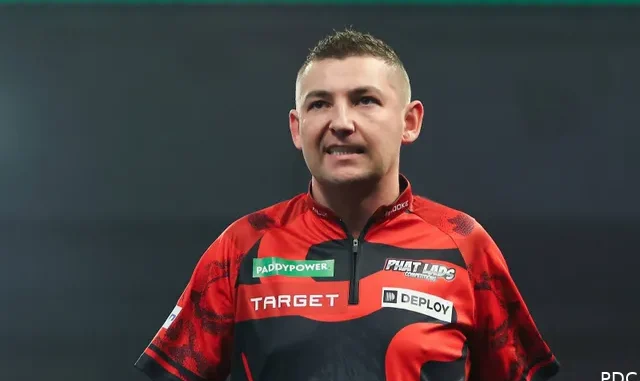
The professional darts circuit is currently witnessing an unprecedented era of dominance by a select few, leaving even established major champions like Nathan Aspinall grappling with the harsh realities of the modern game. As the world of darts evolves, the struggle to represent one’s country has become a primary point of contention, leading Aspinall to call for a fundamental overhaul of how the World Cup of Darts is structured.
The Challenge of Being English
For years, the World Cup of Darts has functioned as a celebration of national pride, but for those born in the heartland of the sport, the path to the stage is increasingly blocked. Nathan Aspinall, a two-time major winner and one of the most charismatic figures on the tour, has been refreshingly candid about the mounting frustration. “Honestly, and you can bleep this out, I couldn’t give a shit,” Aspinall remarked when asked about the obsession with chasing the rankings of those above him. However, beneath the blunt exterior lies a deeper concern about the fairness of the current selection system.
The core of the issue lies in the sheer depth of talent within England. Unlike other nations where a single standout player can coast into a World Cup spot, English players are fighting a civil war for selection. “But being English, it’s hard,” Aspinall admitted. “They’re both younger than me as well, which doesn’t help.” The “both” he refers to are none other than Luke Humphries and Luke Littler—the two titans currently occupying the top tier of the sport.
The “Two Lukes” Problem
The emergence of Luke “The Nuke” Littler and the sustained brilliance of world champion Luke Humphries have created a bottleneck at the top of the English rankings. Under the current PDC rules, the World Cup of Darts features two-man teams based strictly on the Order of Merit. With Humphries and Littler sweeping up major titles and prize money at a historic rate, the door has effectively slammed shut for the rest of the English contingent.
Aspinall is the first to acknowledge that this isn’t a matter of luck, but of sheer quality. “Without being blunt, we all know how good the two Lukes are. They are the two best players in the world, hands down. The whole world knows that,” he stated. The dilemma is that even if Aspinall plays the best darts of his life, he remains at the mercy of a system that only allows two representatives per nation.
A Vision for Change
To remedy this, “The Asp” has proposed a radical rethink. He suggests that the World Cup should move away from a rigid two-man format for every nation, or perhaps introduce a system where larger “squads” are utilized, similar to other major international sports. The argument is simple: if the goal of the World Cup is to showcase the best darts in the world, having the world’s 5th, 6th, and 7th ranked players sitting at home because they happen to be from the same country as the world number one and two seems counter-intuitive.
Aspinall’s perspective is one of relentless self-improvement rather than bitterness. He understands that the standard has been raised and the onus is on the chasing pack to bridge the gap. “You’ve just got to keep getting better. They’re not going to step off, if you know what I mean? You’ve got to get to their level; they ain’t going to come down to yours,” he explained.
Looking Ahead
As the 2026 season progresses, the conversation around tournament formats continues to grow. With Aspinall finding his form again and other English stars like Michael Smith and Stephen Bunting remaining in the hunt, the pressure on the PDC to consider a “World Cup overhaul” is reaching a fever pitch. For now, Aspinall remains focused on his own board, determined to prove that while it might be hard being English, it’s a challenge he’s more than willing to meet.
Leave a Reply