
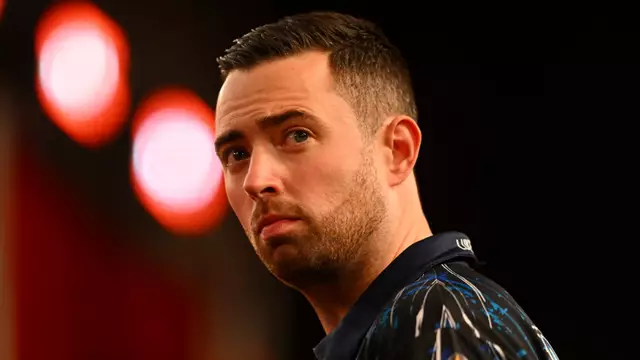
Luke Humphries has offered a revealing glimpse into the astonishing financial reality of modern professional darts, explaining that top players can now earn remarkable sums of money before they even step onto the stage to compete.
Speaking candidly about the sport’s rapid commercial growth, the world champion described how sponsorship deals alone can provide a substantial income stream. Reflecting on his early days as a professional, he recalled that companies were willing to pay thousands simply to have their branding displayed on a player’s shirt. According to Humphries, it was possible to collect “five, 10 grand for each sponsor,” meaning a competitor could walk into an event with “£30,000 to £40,000 on your shirt before you’ve even thrown a dart.”
Those figures, he emphasized, were from several years ago—making the present-day situation even more extraordinary. As television exposure, prize funds, and global interest in darts have surged, earnings across the elite level have climbed dramatically. Humphries openly described the scale of money now circulating in the sport as “ridiculous” and even “silly,” highlighting just how far professional darts has come from its comparatively modest past.
His own journey illustrates that transformation. During his first full season on the professional circuit, Humphries earned roughly £50,000 in prize money. A similar return followed the next year, and when additional tournament winnings and sponsorship income were included, his annual earnings quickly moved into six-figure territory. Reaching that level of financial security, he explained, removed much of the pressure that young professionals often feel and allowed him to focus entirely on improving his game.
Since then, both Humphries’ career and the sport’s prize structures have accelerated sharply. Across a recent two-year stretch, his tournament earnings climbed well beyond the million-pound mark, underlining not only his consistency at the top level but also the booming economics of modern darts. Major championships now offer record-breaking rewards, with the sport’s biggest event paying a seven-figure sum to the winner—an amount that would have seemed unimaginable not long ago.
Despite the extraordinary financial incentives, Humphries insists money is no longer what drives him. Having already secured life-changing earnings, he says his motivation now comes from achievement, legacy, and the pursuit of further titles. In fact, he has suggested that winning another world championship would mean more to him than the enormous cheque that accompanies it, a mindset that reflects the competitive focus shared by many of the game’s leading figures.
The broader landscape of professional darts reinforces his comments. Premier events distribute vast prize funds across weekly competitions and final standings, while emerging stars and established champions alike benefit from growing sponsorship interest and worldwide popularity. Packed arenas, expanding television audiences, and increased commercial investment have combined to transform darts into one of the most financially rewarding sports on the circuit.
Humphries’ reflections ultimately highlight more than just impressive numbers—they reveal a sport in the midst of a historic boom. What was once seen primarily as a working-class pub game has evolved into a global spectacle capable of delivering wealth, fame, and long-term security to its biggest names.
Yet even in this era of unprecedented earnings, the world champion’s message is clear: the true reward still lies in lifting trophies, making history, and proving himself against the very best. Money may have reshaped the landscape of darts, but for Luke Humphries, the pursuit of greatness remains priceless.
Leave a Reply