
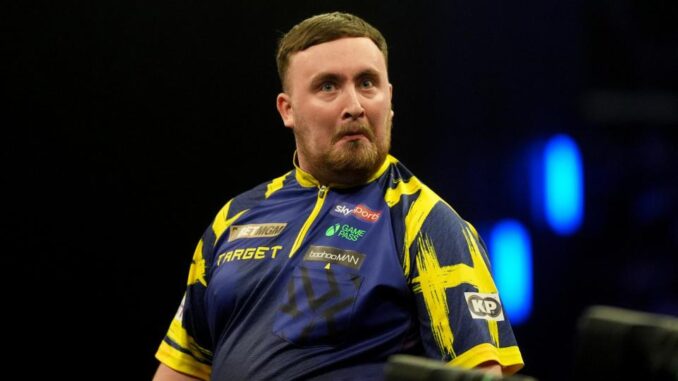
In a bold and forward-thinking move amid the rapid rise of artificial intelligence, darts sensation Luke Littler has taken proactive steps to safeguard his personal brand and likeness. The 19-year-old world number one, already a two-time world champion and one of the most recognizable faces in modern sports, has submitted an application to the UK’s Intellectual Property Office (IPO) to trademark his own face. This innovative approach aims to combat the growing threat of AI-generated fakes and unauthorized reproductions that could exploit his image for profit.
Littler’s meteoric rise from a 16-year-old prodigy to global stardom has made him a prime target for such misuse. Since bursting onto the scene in 2024, winning the BBC Young Sports Personality of the Year and claiming multiple major titles—including two PDC World Championships—he has become a highly marketable figure. His likeness already appears on merchandise, endorsements, and promotional materials worldwide. Previously, he successfully trademarked his nickname “The Nuke” in the United States, demonstrating his savvy in protecting his commercial identity. Now, extending that protection to his facial image represents a pre-emptive strike against emerging digital challenges.
The core motivation behind the application is clear: to prevent fake products powered by AI from using his picture without permission, which could otherwise breach copyright laws and dilute his brand. As generative AI tools become more sophisticated, creating deepfakes, altered images, or entirely fabricated content featuring celebrities has become alarmingly easy. These could range from misleading advertisements and counterfeit merchandise to deceptive social media posts or even AI-generated videos that misrepresent Littler in compromising or commercial scenarios. By securing trademark protection for his face, Littler seeks to establish stronger legal grounds to challenge such unauthorized uses, filling gaps in existing privacy and personality rights laws that often struggle to keep pace with AI advancements.
Experts in intellectual property and sports rights have described the move as a smart, forward-looking strategy, though not necessarily a complete silver bullet against every form of misuse. Trademarking a face is an uncommon but increasingly relevant tactic in the digital age, as seen with other high-profile athletes who have pursued similar protections. It grants the holder exclusive rights to use the mark in connection with specific goods and services, allowing them to pursue legal action against infringers more effectively. For Littler, whose career trajectory suggests even greater commercial opportunities ahead, this could prove invaluable in maintaining control over his image as his fame continues to grow.
The application is currently under examination at the IPO, a process that will determine whether it meets the necessary criteria for registration. If approved, it would add another layer of defense to Littler’s intellectual property portfolio, complementing his existing trademarks and helping to deter opportunistic exploitation. In an era where AI can replicate human appearances with startling accuracy, such measures highlight a broader industry concern: how public figures can protect themselves from technology that blurs the line between real and fabricated content.
Littler’s decision reflects not just personal caution but a broader awareness among young stars navigating unprecedented scrutiny and opportunity. As one of the youngest athletes to achieve such prominence, he has already faced intense public attention, including crowd reactions during events and constant media coverage. Protecting his image from AI manipulation ensures that his legacy remains authentic and under his control. This step could set a precedent for other emerging talents in darts and beyond, encouraging proactive brand management in the face of evolving technological risks.
Ultimately, Littler’s trademark bid underscores the intersection of sports celebrity, technology, and law. While the full impact will depend on the IPO’s decision and future enforcement, it sends a clear message: even at 19, the darts phenom is thinking long-term about preserving the integrity of his brand in a world where AI can recreate anyone, anytime. As his career continues to soar, this protective measure may prove as strategic on the business front as his precision is on the oche.
Leave a Reply