
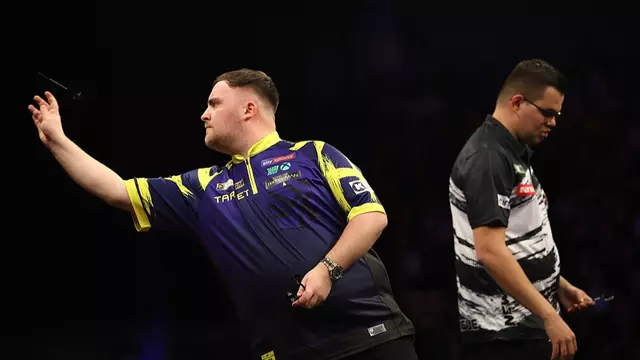
Luke Littler’s Premier League night ended in disappointment on the scoreboard, but the reaction that followed quickly became the real headline. The teenage world champion was beaten 6–4 in the quarter-finals by Gian van Veen on opening night in Newcastle, a result that stunned many inside the arena. Yet within moments of the defeat, attention shifted away from the upset itself and toward Littler’s immediate response to sections of the crowd who had booed him during the contest.
Rather than retreat quietly after the loss, Littler addressed the atmosphere head-on. The 18-year-old has grown increasingly familiar with hostile receptions in recent months, and his message made clear that the noise from the stands does not intimidate him. He insisted he was “not bothered” by the boos, delivering a defiant tone that reflected both frustration and resilience. It was another example of the outspoken honesty that has become part of his public persona as he navigates life at the very top of the sport.
The tension between Littler and certain crowds has been building since his meteoric rise transformed him from crowd favourite to dominant figure. During earlier major events, he admitted he had “lost his head” in the heat of the moment when faced with jeers, openly acknowledging the emotional challenge of competing under intense scrutiny at such a young age. At the same time, he has repeatedly pointed out that pressure and criticism are natural consequences of success—especially when a player moves from underdog to champion in such a short space of time.
His defeat in Newcastle therefore felt significant beyond the simple result. The Premier League’s weekly format leaves little room to process setbacks, meaning every performance—and every reaction—comes under immediate examination. Losing on opening night was a surprise, particularly given Littler’s status and recent achievements, but the manner in which he handled the crowd ensured the discussion extended far beyond darts alone.
For Van Veen, the victory represented a major statement. Overcoming the reigning champion in such a high-profile setting demonstrated both composure and belief, reinforcing the depth of talent currently pushing through the professional ranks. Upsets are a defining feature of the Premier League, where short matches and relentless scheduling create opportunities for momentum to swing quickly. Littler’s defeat served as an early reminder that reputation alone guarantees nothing in this competition.
Still, much of the focus remained on the teenager’s evolving relationship with spectators. Some observers view the boos as proof of his growing stature—evidence that he is now the player others want to beat. In darts history, leading figures have often faced hostile atmospheres once dominance replaces novelty. From that perspective, the crowd reaction may signal respect as much as resistance. Others, however, believe Littler’s visible frustration and candid comments risk fuelling the cycle, turning ordinary rivalry into something more personal.
What is beyond dispute is the extraordinary pressure surrounding a player so young. Littler’s rapid ascent has required him to mature in public, handling global attention, expectation, and criticism simultaneously. Every gesture, comment, and performance is dissected in real time. Moments like Newcastle highlight how thin the line can be between confidence and controversy when emotions run high in elite sport.
Despite the setback, Littler’s broader outlook remains unchanged. His talent, scoring power, and fearless approach continue to mark him as one of the most formidable competitors in the game. A single defeat—especially in a format known for unpredictability—does little to alter the long-term picture. The greater test lies in response: how quickly he resets, how calmly he channels emotion, and how effectively he turns adversity into motivation.
The Premier League schedule offers an immediate chance to do exactly that. With new venues, new opponents, and fresh narratives each week, momentum can shift as rapidly as it disappears. Littler has already shown throughout his young career that setbacks rarely linger for long. His ability to rebound will once again shape the conversation in the weeks ahead.
In the end, the night in Newcastle may be remembered less for the 6–4 scoreline and more for the image that followed—a teenage champion standing firm in the face of boos, refusing to hide from the moment. Whether seen as defiance, growing pains, or the natural fire of a fierce competitor, it captured a defining truth of elite sport: greatness is measured not only in victories, but in how athletes respond when the result goes against them.
Leave a Reply