
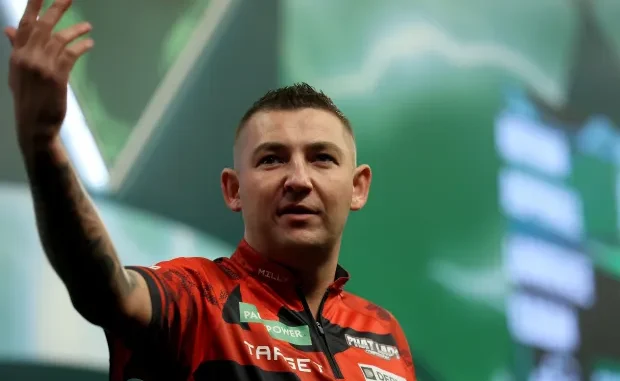
The electric atmosphere of the Paddy Power World Darts Championship at Alexandra Palace is one of the sport’s greatest strengths, drawing thousands of passionate fans who create an unforgettable party vibe with costumes, chants, and endless energy. Yet, amid the cheers and fancy dress, a growing issue has been disrupting the precision and focus required at the elite level: spectators whistling during players’ throws. This distracting habit has become a major frustration for many professionals, and one prominent voice leading the charge for change is Nathan Aspinall, the Stockport star known as “The Asp.”
Aspinall, a two-time major winner with titles at the UK Open and World Matchplay, has been vocal about the problem, particularly as it continues to plague high-stakes tournaments like the ongoing World Championship. The 34-year-old Englishman, currently competing in the 2025/26 edition, believes the current measures—such as ejecting offenders from the venue—are not sufficient deterrents. He argues for much stricter punishments to eradicate the behavior once and for all.
In a candid discussion, Aspinall highlighted his own efforts to address the issue directly. “I’ve said in EuroTours, in my on-stage interviews, ‘Will you just stop whistling? Enjoy the darts, stop being muppets,’” he recalled. His pleas, meant to encourage respectful enjoyment of the game, unfortunately backfired in the court of public opinion. Clips of his comments spread rapidly across social media platforms like Instagram and TikTok, often framed sensationally as “Nathan lashes out at the crowd.” This misrepresentation only fueled the debate, but Aspinall remains undeterred, emphasizing that his intent was to protect the integrity of the sport.
The core of the problem lies in the sheer difficulty of policing such actions in a packed arena. With crowds swelling to around 10,000 enthusiastic supporters at Ally Pally, identifying and stopping every individual who decides to whistle—often by sticking fingers in their mouth—is nearly impossible in real time. Whistling creates an abrupt, piercing noise that can throw off a player’s rhythm at the most critical moments, when concentration is paramount for hitting those tiny doubles or setting up big finishes.
Aspinall proposes a bold solution: longer-term bans for those caught disrupting play. “How do you monitor 10,000 people from sticking their fingers in their mouth to whistle? So, what can be done? I think the people that get caught shouldn’t just get kicked out, they should get banned for say five years,” he stated firmly. Such a penalty, he believes, would send a strong message and discourage potential offenders, knowing that one moment of poor judgment could cost them access to multiple future events.
This call for five-year bans comes at a time when darts is enjoying unprecedented popularity, thanks in part to the rowdy, carnival-like crowds that have become its trademark. The sport has evolved from quiet pub games to sold-out arenas where fans sing, dance, and create viral moments. However, as the professional level intensifies—with bigger prize pots, including a record £1 million for this year’s champion—the line between fun and fair play is being tested. Other players have echoed similar sentiments in recent years, noting how distractions like whistling, excessive booing during walk-ons, or even deliberate heckling can impact performance in a game that demands split-second accuracy.
Aspinall’s stance is rooted in his deep love for darts and respect for his fellow competitors. Having battled through personal challenges, including injuries and periods of dartitis, he understands the mental fortitude needed to excel on stage. He wants fans to enhance the experience, not hinder it. “Enjoy the darts,” he urges, advocating for an environment where the focus remains on the skill, drama, and excitement unfolding on the oche.
As the World Championship progresses into its later stages, with stars like defending champion Luke Humphries and teenage sensation Luke Littler captivating audiences, the debate over crowd behavior is likely to intensify. Aspinall’s proposal for extended bans could spark wider discussions among organizers, players, and fans about balancing the unique darts atmosphere with the professionalism the sport now demands. If implemented, it might just ensure that the only sounds piercing the air are the thuds of darts hitting the board and the roars of genuine celebration.
In an era where darts is bigger and bolder than ever, preserving its spirit while protecting its players seems more important than ever. Aspinall’s outspoken views highlight a pivotal moment for the game—one where tough decisions could help secure its bright future.
Leave a Reply