
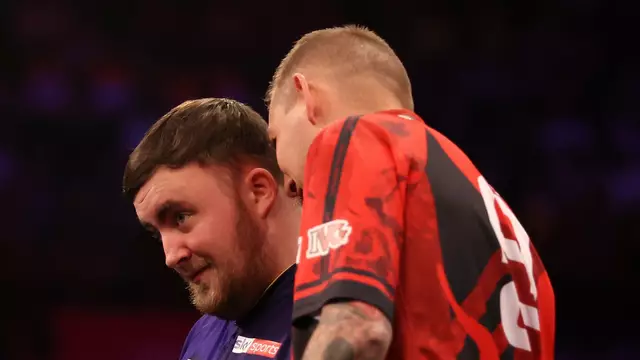
In the high-stakes world of professional darts, where camaraderie often shines through the intense competition, a poignant truth has emerged about one of the sport’s brightest stars. Nathan Aspinall, a seasoned player and two-time major winner, has opened up about the unfortunate reality facing teenage sensation Luke Littler: a lack of genuine friendships on the PDC tour due to widespread jealousy among his peers. “He hasn’t got many mates on the tour because a lot of people are jealous of him,” Aspinall revealed candidly. “I am not. I like him. He’s a nice kid. I appreciate what he has done for the game, for himself and his family. Listen, we are all in his debt for what he has done in the game.”
This admission paints a somber picture behind the glamour of Alexandra Palace and the glittering stages of major tournaments. Littler, the reigning world champion who captured the PDC World Darts Championship title at just 17 last year, has revolutionized the sport. His meteoric rise—from a debut final appearance to claiming the Sid Waddell Trophy with a commanding victory over Michael van Gerwen—has brought unprecedented attention, sponsorships, and growth to darts. Crowds flock to events, television viewership soars, and the professional circuit benefits immensely from the “Littler effect.” Yet, this very success appears to have created an undercurrent of envy that isolates the young prodigy from many of his colleagues.
Aspinall, known as “The Asp,” positions himself as an exception to this trend. He views himself as a mentor of sorts to the teenager, describing their dynamic with warmth: “I see myself, not so much of a role model, but a bit of an older brother to him in the darts world. We don’t speak much outside of darts but when it comes to darts, I do try to help him.” This big-brother mentality stems from years of observation. Aspinall has watched Littler’s handling of fame with admiration, noting how impressively the young star navigates the relentless media scrutiny and pressure that comes with being the face of the sport. “He’s a nice kid. I think he’s a fantastic darts player. How he has handled himself at 17 with the media. I don’t think many men, full-grown adults, could do what he has done,” Aspinall praised.
The roots of their connection go even deeper. Aspinall recalls his first encounter with Littler over a decade ago, when the future champion was just 12 years old competing in a local tournament. “The first time I came across Luke, it was in Chester in a tournament and I beat him 4-3. He was around 12,” Aspinall shared. Even then, Littler’s talent was evident, nearly upsetting a player who would go on to become a top professional. Aspinall was struck not only by the boy’s skill but also by the tough love from his father, which he believes forged the resilience that defines Littler today.
Despite the jealousy Aspinall describes, he emphasizes the positive impact Littler has had. Players across the board, including those harboring envy, owe a debt to the teenager for elevating the sport’s profile and financial opportunities. Increased prize money, bigger crowds, and global interest have trickled down to everyone on the tour. Yet, this doesn’t erase the human element—the sting of seeing a newcomer achieve so much so quickly while others grind for years.
Littler himself seems aware but unfazed by the dynamics. When questioned about potential jealousy, he responded simply: “I don’t know.” His focus remains on the oche, where his performances speak volumes—racking up titles, hitting televised nine-darters at record young ages, and dominating with heavy scoring and clinical finishing. As he approaches his 19th birthday, Littler continues to shatter records, defending his world title and inspiring a new generation of fans and players.
Aspinall’s words highlight a bittersweet side of professional sports: success can breed isolation as much as admiration. In darts, a game often celebrated for its friendly rivalries and post-match pints, this revelation adds depth to the narrative surrounding Littler. While he may lack a wide circle of tour mates, he has at least one ally in Aspinall, who tips his hat to the kid’s achievements and vows to support him amid the challenges. As the PDC circuit evolves with Littler at its forefront, perhaps time will soften the edges of envy, allowing more players to embrace the phenomenon they’ve all benefited from. For now, Aspinall’s honest insight serves as a reminder that even in victory, the path to the top can be a lonely one.
Leave a Reply