
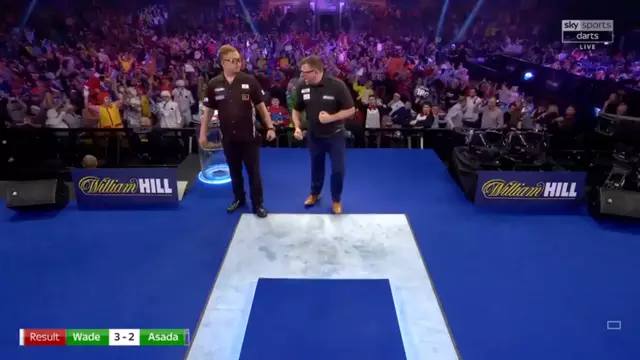
The electric atmosphere of Alexandra Palace turned tense during a second-round match at the PDC World Darts Championship, where veteran Englishman James Wade found himself at the centre of a storm following his aggressive conduct towards Japanese opponent Seigo Asada. The Professional Darts Corporation has imposed a significant fine on Wade for what has been widely described as unsportsmanlike and intimidating actions on stage, reigniting debates about player behaviour in the high-pressure environment of the sport’s biggest event.
Wade, nicknamed “The Machine” for his methodical and often emotionless style, battled through a hard-fought 3-2 victory over Asada, coming from behind twice to advance. The match itself was a thriller, with both players showcasing skill and determination, but it was overshadowed by Wade’s on-stage antics. After levelling the score at one set apiece, Wade celebrated aggressively, shouting directly in Asada’s face in a manner that left many viewers and commentators uncomfortable. The intensity escalated in his post-match interview, where he made startling admissions.
“I kept giving it to him, I wanted to hurt him, I wanted to really hurt him in the face,” Wade declared on live television, explaining his approach as part of psyching out his opponent and representing his country. These words sent shockwaves through the darts community, prompting immediate backlash.
Commentator and former player Wayne Mardle did not hold back in his assessment. “That’s thuggish behaviour, there’s no place in darts for that,” Mardle said, expressing disbelief at the intimidation tactics. He questioned whether Wade truly believed his actions were acceptable, adding, “He can’t think that’s right and no-one watching it can think it’s right.” Mardle’s strong condemnation highlighted the contrast between the sport’s usual camaraderie and the raw aggression displayed that night.
The following day, Wade issued a public apology, acknowledging the out-of-character outburst. “I would like to take this opportunity to sincerely apologise for my actions last night,” he stated. “Seigo Asada is a great player and I would like to say sorry to him, the fans and the PDC.” He attributed the incident to a hypomania episode linked to his well-documented struggles with mental health, explaining that he was “fighting a battle with myself” before even stepping on stage. Wade expressed deep remorse, noting that no one was more upset about the events than he was.
Despite the apology and context provided, the Darts Regulation Authority reviewed the match and deemed Wade’s conduct a breach of player responsibilities. A substantial fine was levied, underscoring the PDC’s commitment to maintaining standards of sportsmanship. While the exact amount has been reported variably in discussions around the sport, it serves as a clear message that aggressive intimidation has no place on the oche, regardless of the competitive fire that fuels the game.
This incident throws a spotlight on the mental pressures faced by professional darts players. Wade has been open about his bipolar disorder over the years, and how it can lead to unpredictable mood swings. His career has been a rollercoaster of brilliance and challenges—rising to world number two, claiming 11 major titles including the World Matchplay and Premier League, yet never quite capturing the World Championship crown despite multiple semi-final appearances. Known as the most successful left-handed player in PDC history, Wade’s smooth throwing action and clutch finishing have earned him legions of fans, but moments like this remind everyone of the human side behind the precision.
Asada, for his part, handled the situation with composure, refusing to be drawn into retaliation and focusing on his performance. The Japanese qualifier gave Wade a real scare, pushing the seeded player to the limit and earning praise for his resilience and skill.
The World Championship is renowned for its drama, from fairy-tale runs to heartbreaking exits, but incidents like this prompt reflection on how the sport balances passion with respect. The PDC has evolved significantly, growing into a global phenomenon with massive prize funds and superstar players, yet preserving the essence of fair play remains crucial.
Wade continued in the tournament after the win, but the shadow of the controversy lingered. For a player who has contributed so much to darts—entertaining crowds with his understated demeanour and delivering memorable performances—the episode serves as a poignant reminder of the fine line between competitive edge and crossing boundaries.
As the championship progresses with its mix of upsets, nine-darters, and epic comebacks, stories like Wade’s add layers to the narrative. Darts thrives on personality and intensity, but the consensus remains clear: the sport is better when rivalry stays respectful. Fans and officials alike hope this serves as a learning moment, allowing Wade to channel his fire positively in future battles on the board.
Leave a Reply