
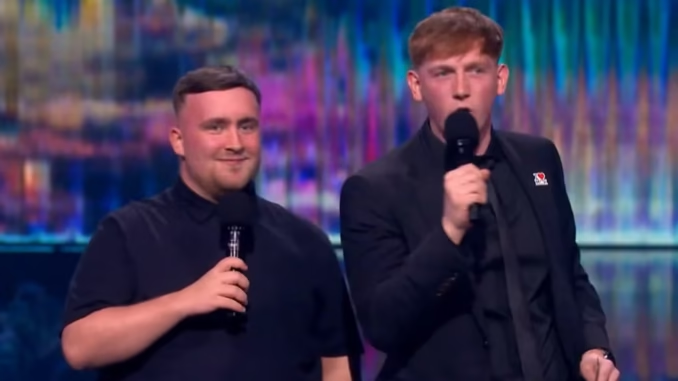
In the glittering chaos of the Brit Awards 2026, held for the first time in Manchester’s buzzing Co-op Live arena, the night was meant to celebrate the best of British music with high-energy performances, star-studded appearances, and a touch of irreverent humor. But amid the flashing lights, thunderous applause, and chart-topping hits, one moment stole the spotlight for all the wrong—or perhaps delightfully cheeky—reasons. It involved a fiery redhead known as Angry Ginge, a darts prodigy, and a microphone that suddenly went silent, leaving audiences at home scratching their heads and scrambling to lip-read.
The evening had already been electric. Artists like Raye, who dominated with multiple wins including Album of the Year, and international sensations like Geese, who snagged International Group of the Year, kept the energy soaring. Host Jack Whitehall, with his signature sharp wit, roamed the audience, cracking jokes that had the live crowd roaring. But not everything made it to the living rooms across the UK. The broadcast on ITV seemed to have a hair-trigger censor button, muting out risque remarks faster than a pop star could hit a high note. And when Angry Ginge stepped up to the mic, it was no exception.
Angry Ginge, whose real name is Morgan Burtwistle, isn’t your typical awards show presenter. The 24-year-old Salford native rose to fame as a Twitch streamer, captivating millions with his unfiltered rants, gaming prowess, and larger-than-life personality. His victory on I’m A Celebrity… Get Me Out of Here! catapulted him into mainstream stardom, where he traded jungle trials for red carpets. Teaming up with him on stage was 19-year-old darts sensation Luke Littler, fresh off his World Darts Championship triumph and still riding the wave of his meteoric rise. The unlikely duo was tasked with presenting an award, bringing a fresh, youthful vibe to the proceedings. Littler, dressed sharply and looking every bit the composed teen icon, stood beside Ginge, who sported his trademark ginger locks and a mischievous grin.
As the pair took the stage, the Manchester crowd erupted. Ginge, clearly reveling in the hometown advantage, leaned into the microphone with enthusiasm. “Hello Manchester!” he boomed, his voice echoing through the arena. The audience cheered back, sensing the local pride bubbling up. Then came the line that sealed the deal: “It is an absolute privilege to see the Brits in Manchester because it shows people are realising London is a sh*thole.”
For those watching live in the venue, the quip landed like a perfectly timed punchline, drawing laughs and whoops from the northern contingent. But on the ITV feed, the audio abruptly cut out mid-sentence, replaced by an awkward silence that hung in the air like a bad note. Littler, standing awkwardly beside him, glanced sideways with a sheepish expression before muttering, “Okay…” and swiftly steering the conversation back to the award at hand. Ginge, unfazed, smirked as if he knew exactly what he’d done—poking fun at the age-old North-South divide in true Mancunian style.
This wasn’t an isolated incident in what turned out to be a heavily edited broadcast. Earlier in the night, Whitehall’s banter had also been sliced and diced. As he mingled with the celebrity-packed tables, he spotted politicians in the crowd and quipped something about Peter Mandelson that was deemed too spicy for prime time, leading to another mute moment. Even Sharon Osbourne, presenting alongside her family, had her heartfelt tribute to her husband Ozzy partially silenced when she channeled his rock ‘n’ roll spirit a bit too vividly. And when Geese’s frontman Max Bassin accepted their award, his impassioned speech veered into global issues, prompting yet another censor intervention. Viewers at home flooded social media with frustration, decrying the “overly strict” production that seemed to strip the event of its raw, rebellious edge. “What happened to rock and roll?” one fan tweeted, echoing a sentiment shared by thousands. Others praised the unfiltered moments that slipped through, arguing they added authenticity to an otherwise polished affair.
The Brit Awards’ move to Manchester was itself a bold statement. Traditionally anchored in London’s O2 Arena, the shift northward symbolized a broader effort to decentralize the UK’s cultural spotlight. For locals like Ginge, it was a vindication—a chance to highlight Manchester’s vibrant music scene, from Oasis legends to emerging grime artists. The city, with its industrial grit and creative pulse, provided a fitting backdrop for an awards show that honors innovation and boundary-pushing. Yet, the censorship highlighted the tightrope walk broadcasters face in live events: balancing entertainment with family-friendly standards. In a post-pandemic era where live TV thrives on spontaneity, such heavy-handed editing risked alienating the very audience it aimed to captivate.
Ginge’s jab at London tapped into a deeper cultural rivalry. The capital, with its skyscrapers, tube lines, and global allure, has long been seen by some Northerners as overhyped and overpriced. Manchester, on the other hand, boasts a proud history of defiance—from the suffragettes to the Madchester music explosion. By calling out the “sh*thole” perception, Ginge wasn’t just swearing for shock value; he was voicing a sentiment that resonates with many outside the M25 bubble. It was a reminder that British humor often thrives on self-deprecation and regional ribbing, even if it occasionally crosses into broadcast no-go zones.
In the aftermath, reactions poured in from all corners. Fans of Ginge hailed him as a hero for keeping it real, with clips of the uncensored moment circulating online faster than viral hits. Littler, ever the poised professional, later laughed it off in interviews, admitting the awkward pause caught him off guard but praising Ginge’s boldness. The incident even sparked debates about freedom of speech on live TV, with some calling for looser reins to let personalities shine. Meanwhile, ITV defended their approach, emphasizing the need to maintain standards for a broad audience tuning in on a Saturday night.
As the confetti settled and winners clutched their trophies, the Brit Awards 2026 will be remembered not just for the music milestones but for those fleeting moments of unscripted mayhem. Angry Ginge’s mic mishap encapsulated the night’s spirit: a blend of glamour, grit, and a dash of controversy. In a world where everything is curated and filtered, it’s refreshing when someone like Ginge reminds us that sometimes, the best lines are the ones that get bleeped out. The event proved that even in the polished realm of awards shows, a little Northern fire can light up the stage—and occasionally short-circuit the sound system.
Leave a Reply