
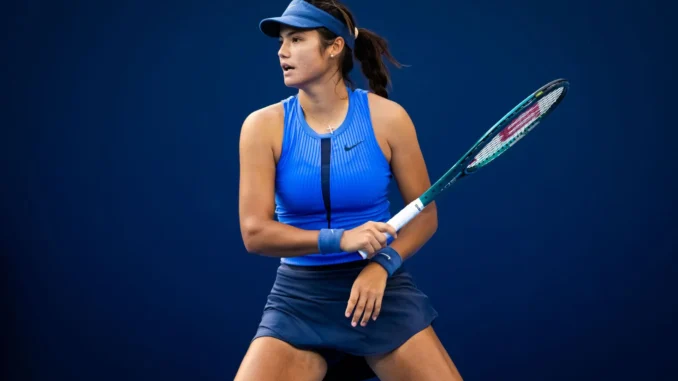
In the sweltering spotlight of China’s Ningbo Open, where the air hangs heavy with humidity and the promise of redemption, Emma Raducanu’s quest for consistency crumbled into a heartbreaking first-round implosion on October 14, 2025. The 22-year-old British phenom, still clinging to the glow of her improbable 2021 US Open triumph—the first by a British woman in 44 years—faced off against world No. 219 wildcard Zhu Lin, a local underdog whose own injury-riddled path mirrored Raducanu’s in uncanny ways. What unfolded was a grueling three-set saga (6-3, 4-6, 6-1) that lasted 2 hours and 26 minutes, exposing not just physical frailties but a torrent of fan disillusionment that has left the tennis world reeling. As Zhu savored her upset with a roar from the home crowd, Raducanu trudged off court, her season teetering on the brink, while online vitriol painted her as “the worst Grand Slam winner” and a player who “doesn’t have what it takes.”
The match began like a fairy tale reboot, with Raducanu channeling the fearless fire that felled Leylah Fernandez in that New York epic. She stormed to a 3-0 lead in the opening set, her flat groundstrokes slicing through the muggy atmosphere like arrows, breaking Zhu’s serve twice amid a frenzy of errors from the Chinese veteran. The crowd, sparse but fervent, offered polite applause as Raducanu held firm, converting her fifth set point after 55 minutes of break-filled chaos. “It’s a special feeling,” Raducanu had shared just days prior, her voice laced with that trademark optimism, reflecting on the electric buzz of Asia’s hard-court swing. At 6-3, it seemed the world No. 29 was poised to extend her recent ranking surge—from outside the top 30 to 29th this week— and build momentum after a summer resurgence that included deep Wimbledon runs and a seeded spot awaiting at the Australian Open.
But as the second set dawned, the script twisted into a nightmare. Zhu, a 31-year-old wildcard whose ranking had nosedived from a career-high 31 after a six-month elbow layoff last year, sensed vulnerability and pounced. Raducanu’s movement, already shadowed by whispers of lingering illness from Wuhan, grew labored; doubles faults crept in, and her first-serve win percentage dipped to a dismal 51%. Trailing 3-4, she summoned the physio for the first medical timeout, her team checking blood pressure and vital signs in a scene that echoed the dizzying heatstroke that forced her retirement against Ann Li the previous week (down 1-6, 1-4 in blistering 32-degree conditions). “I suppose you’re proud out there, you don’t want to give anything away to your opponent, you don’t want to let anyone know that you’re not feeling great but the bottom line is health has to be the utmost priority,” Raducanu had confessed post-Wuhan, a raw glimpse into the warrior’s dilemma that defines her career.
She battled back to level at 4-4, forcing a decider and drawing roars for a blistering backhand down the line that evoked her halcyon days. Yet, the third set arrived like a storm cloud. Raducanu clutched her lower back after chasing a forehand, her strides shortening to shuffles as Zhu extended rallies with defensive slices, feeding off the partisan energy. Another timeout followed at 1-2 down, medics taping and treating the recurring flare-up that has dogged her since surgeries on ankles, wrists, and back. Refusing to retire—unlike in Wuhan—she embodied the stubborn grit that propelled her from a qualifier to queen in Flushing Meadows. But resistance crumbled; Zhu reeled off five straight games, claiming 16 of the last 19 points in a clinical 6-1 rout. As Raducanu netted a tame forehand on match point, the court fell silent save for Zhu’s triumphant wave. “This year, I’m trying my best to perform,” the victor beamed in her on-court interview, acknowledging the end-of-season grind while tipping her cap to Raducanu’s fight.
This Ningbo nosedive caps a torturous Asian odyssey for Raducanu, her third straight opening-round exit following squandered match points against Barbora Krejcikova in Seoul and Jessica Pegula in Beijing, plus that Wuhan walkover. It’s her 22nd tournament of 2025, the heaviest slate since her breakthrough, amassing 50 WTA matches—a double-edged sword sharpening her game but taxing her frame. Skipping the French Open for recovery post-Wimbledon, she’s climbed 28 spots in the rankings through selective fire, yet these physical potholes—exacerbated by Ningbo’s 89% humidity—threaten to derail a season of quiet triumphs. Her coach, Francis Roig, absent in China, has an end-of-season pact with her, but whispers grow: Will she heed the pullouts for Pan Pacific and Hong Kong, or push toward the WTA Finals?
The fallout has been seismic, particularly among fans whose adoration has curdled into chaos. Social media erupted in a maelstrom of memes, mockery, and outright venom, transforming a tough loss into a referendum on Raducanu’s legacy. “Emma Raducanu doesn’t have what it takes,” blasted one viral post, tallying likes as it dissected her “mental fragility” against lower-ranked foes. Another, more lacerating, dubbed her “the worst Grand Slam winner,” a barb that dredged up her post-US Open slump—eight surgeries, coaching carousel spins, and a win percentage hovering below 50% in majors since. “How do you lose to 219 after leading? Overhyped flash in the pan,” sneered a commenter, echoing a chorus of frustration from British supporters who once hailed her as the sport’s next big thing. Hashtags like #RaducanuRelapse trended, with edits splicing her New York glory against Ningbo grimaces, fueling debates on whether her wildcard status—courtesy of tournament favoritism—breeds complacency.
Yet, amid the disarray, glimmers of empathy pierce the gloom. Zhu herself praised Raducanu post-match as “a fighter who inspired me today,” a nod to the shared scars of injury that bind them. Insiders point to positives: Raducanu’s grass-court revival, her first deep major runs in years, and that ranking bump securing seeds Down Under. “She’s incredibly tough, but these conditions are brutal,” offered Tim Henman, her unofficial mentor, urging rest over recklessness. Fans like one steadfast voice countered the tide: “Prioritize that body—you’ve got the talent to light up courts for years; don’t let the grind dim it.” It’s a reminder that Raducanu’s story isn’t flop—it’s flux. From teen prodigy to poster child for burnout, she’s navigated a post-Slam curse that felled predecessors like Emma Navarro or Sofia Kenin, all while retooling under pressure.
As Zhu advances to face top seed Mirra Andreeva, her elbow-scarred resilience a poetic counterpoint, Raducanu retreats to regroup. The off-season looms like a lifeline, offering ice baths, physio marathons, and perhaps a mental reset to silence the doubters. This Ningbo shock isn’t erasure—it’s a scar in her scrapbook, one that could forge the steel for 2026’s battles. In tennis’s unforgiving theater, where one backhand can crown or crush, Raducanu’s encore awaits. Will she rise phoenix-like, or fade into footnote? The fans in disarray hold their breath, but deep down, they know: Emma’s got fight left in her serve. After all, the greatest slams aren’t just won—they’re survived.
Leave a Reply