
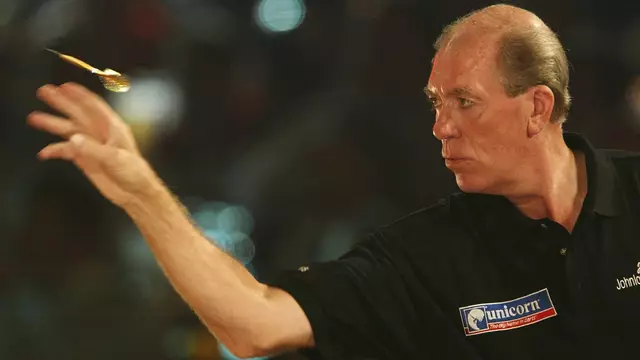
In the world of darts, few moments carry the weight of true perfection. A nine-dart finish—completing a leg of 501 in exactly nine darts—is the ultimate feat, akin to a hole-in-one in golf or a maximum break in snooker. It’s a blend of precision, nerve, and sheer skill that players dream of achieving, especially under the bright lights of television cameras.
Back in the 1980s, darts was booming in popularity, with larger-than-life characters dominating the oche. The sport’s golden era featured rivalries that captivated audiences, and major tournaments offered increasingly attractive prizes. One such event was the MFI World Matchplay in October 1984, held at the Fulcrum Centre in Slough. Sponsors had introduced a groundbreaking incentive: a whopping £100,000 bonus for anyone who achieved a nine-dart finish, with an extra £2,000 if it happened on television. In an era when winning Wimbledon netted around £90,000 or the Open golf championship about £60,000, this was staggering money—truly life-changing.
Enter John Lowe, the seasoned English professional nicknamed “Old Stoneface” for his unflappable demeanor. A three-time world champion (1979, 1987, and later 1993), Lowe was already a legend, known for his smooth throwing action and dominance alongside rivals like Eric Bristow and Jocky Wilson. On October 13, 1984, in a quarter-final match against Keith Deller—the surprise 1983 world champion who had stunned Bristow in one of the sport’s greatest upsets—Lowe stepped up to the oche facing a standard 501.
What unfolded next etched Lowe’s name into darts folklore forever. He started with two maximum 180s, scorching the treble 20 bed six times in a row. The crowd buzzed as the impossible seemed possible. Needing 141 to finish, Lowe calmly slotted treble 17, then treble 18, leaving double 18. The final dart flew true, burying itself perfectly in the double for the first-ever televised nine-dart finish.
Even the stoic Lowe cracked a broad smile as the reality sank in. The achievement wasn’t broadcast live but captured for ITV’s highlights show, making headlines across the UK and beyond. Lowe reflected on the magnitude years later: “It’s been done a few times on TV now, but in 1984 mine was massive. It took darts to a new level. Especially because sport is measured by money. I picked up over £100,000 for that nine-darter.”
The prize totaled £102,000 for the perfect leg alone, a record that stood for nearly two decades. Lowe didn’t stop there—he went on to win the entire tournament, defeating Cliff Lazarenko in the final for an additional £12,000, plus more for the highest checkout. His weekend haul exceeded £115,000, prompting legendary celebrations where the hotel bar reportedly ran dry of champagne.
The impact was profound. Lowe’s feat elevated darts’ profile, proving the sport could produce moments of breathtaking excellence worthy of mainstream attention. It also highlighted the growing commercial appeal, with sponsors willing to insure against such rarities. Interestingly, just before the event, Lowe had ended a prize-sharing arrangement with Bristow, who later admitted it cost him dearly when his rival claimed the jackpot.
In today’s game, nine-darters are more frequent thanks to improved boards, higher skill levels, and intense competition among stars like Luke Littler and Michael van Gerwen. Modern bonuses vary, often shared with charities or fans, but none match the sheer scale of Lowe’s windfall relative to the era. Yet, his 1984 masterpiece remains the benchmark—the one that started it all.
Lowe, who played a key role in forming the Professional Darts Corporation in 1993, looks back fondly: “We drank the place dry—it was the biggest moment in my career.” For a player who dominated across three decades, that says everything about the enduring magic of those nine perfect darts.
Leave a Reply