
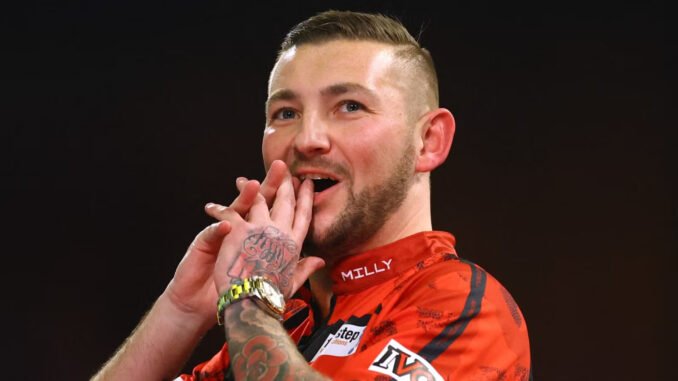
In the high-stakes world of professional darts, where precision meets passion under bright lights and roaring crowds, personal perceptions can sometimes clash with public personas. Nathan Aspinall, the charismatic Stockport star known as “The Asp,” recently opened up about a surprising divide in fan opinions, shining a light on one of the sport’s top players who faces unexpected backlash from casual enthusiasts.
Aspinall, a two-time major winner with titles including the UK Open and World Matchplay, has long been a fan favorite for his relatable journey—from near-financial ruin to PDC stardom—and his fiery on-stage presence. But in a candid discussion, he defended a fellow elite player against unwarranted criticism, revealing a personal anecdote that highlights how misconceptions can fuel dislike.
The player in question is none other than Luke Humphries, the world number one whose cool demeanor and consistent excellence have propelled him to the pinnacle of the sport. Humphries, often dubbed “Cool Hand Luke,” has dominated recent years with multiple major victories and a steady climb from overcoming personal challenges like anxiety to becoming a dominant force.
Yet, despite his achievements, Humphries has faced a wave of online abuse and negativity, particularly after sharing vulnerabilities about the grueling darts schedule impacting his mental health. Aspinall didn’t hold back in condemning this treatment: “He is an absolute credit to the sport. It’s disgusting.”
What surprised many was Aspinall’s admission about his own circle of friends. “You know what, I have a lot of mates that love darts, and no one likes Luke. Honestly, I can’t give you that answer. A lot of my mates can’t stand him. I don’t know what it is.”
This revelation came amid a thrilling night in the Premier League Darts, where Aspinall triumphed on home turf in Manchester, defeating Humphries in a tense final. The atmosphere was electric, with thousands packed into the arena, cheering wildly as players walked on to the iconic oche under dazzling lights.
Aspinall speculated that jealousy over Humphries’ success might play a role, but he emphasized the gap between perception and reality. He shared a telling story: “There were two lads who came away with me to Berlin last week, who both hated Luke. We had a few beers in a hotel bar after, and they went ‘I need to apologise to you, I didn’t like you, but you’re a great lad and that’s it’.”
In Aspinall’s view, many critics simply don’t know the real Humphries off the stage—a genuinely kind and dedicated individual. “People don’t know him. People don’t know the real people. I just don’t understand it, and you know, hopefully, it will change at some point, because he’s a great guy.”
This insight underscores a broader theme in modern darts: as the sport explodes in popularity, with sold-out arenas and global attention, players are under intense scrutiny. The relentless calendar of tournaments, Pro Tours, and exhibitions adds pressure that fans might not fully appreciate. Aspinall himself has battled dartitis and injuries, emerging stronger and more empathetic.
Humphries’ poised style—methodical, unflappable—contrasts with the flamboyant walk-ons and crowd-pleasing antics of others, perhaps contributing to polarized views. While some adore his reliability, others misinterpret it as detachment. Yet his track record speaks volumes: multiple televised titles and a reputation as a role model.
Aspinall’s defense highlights the camaraderie among pros, even rivals. Despite beating Humphries that night, he stood firmly in his corner, hoping greater understanding will shift opinions. In a sport where arrows fly fast and emotions run high, stories like this remind us that behind the scores and celebrations are human connections—and sometimes, a simple pint and chat can bridge divides.
As darts continues its boom, with young stars like Luke Littler drawing new fans and veterans like Aspinall inspiring loyalty, conversations about respect and mental health are more vital than ever. Aspinall’s words serve as a call for fairness: judge the person, not just the player on the oche.
Leave a Reply