
The world of professional darts has never been more thrilling or lucrative, especially with the ongoing PDC World Darts Championship at London’s iconic Alexandra Palace drawing massive crowds and global attention. This year’s tournament, running through early January 2026, features an expanded field of 128 players competing for a record-breaking £5 million prize fund. The winner stands to claim an unprecedented £1 million—a doubling of last year’s top prize that has sent shockwaves through the sport.
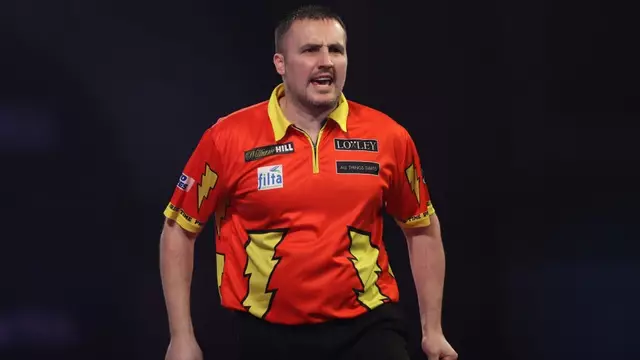
Yet, amid the glamour of nine-darters, roaring fans, and superstar performances from players like defending champion Luke Littler, a former competitor has pulled back the curtain on the financial realities faced by many on the tour. Matthew Edgar, a seasoned darts professional who appeared in the World Championship three times, recently shared insights into the payment process, including an actual remittance notice from one of his past participations. His transparency highlights that while the headline prize money figures sound staggering, the net earnings for most players tell a more nuanced story.
Edgar, who reached the second round once and earned a total of £30,000 across his three appearances (£7,500 twice and £15,000 once), explained the mechanics in detail. “All PDC players are self-employed contractors, not employees of the PDC and so we get remittance notices,” he noted. “We get deductions, two per cent is your PDC levy—that comes off everything before you even get it and comes from playing on the Challenge tour to being world champion.”
This mandatory 2% levy supports the organization’s operations and is deducted upfront from all prize winnings, regardless of the event’s scale. For lower-tier earnings, the impact can be significant. In one example from Edgar’s career, a £7,500 prize for a first-round exit was reduced to around £6,800 after deductions. He further broke it down: “£6,800 is what came into my bank account from the first-round defeat. From that, I’ve got to deduct my travel, my hotel and any other costs with that. Then, the money that is left is open to tax.”
After factoring in expenses like flights, accommodation, and additional fees—sometimes including DRA (Darts Regulation Authority) membership—the take-home amount dwindled further, leaving him with approximately £5,200 in one instance. This reality underscores the challenges for mid-tier or emerging players, who must cover their own costs without the sponsorship buffers enjoyed by the elite.
The contrast with the top earners is stark. Last year’s champion, the teenage sensation who pocketed £500,000 for his victory, exemplifies the boom at the pinnacle. With the prize fund now doubled for 2026—runner-up £400,000, semi-finalists £200,000 each, and even first-round losers guaranteed £15,000—the potential rewards have skyrocketed. Additional incentives, such as bonuses for perfect nine-dart legs, add extra allure, though these are rare feats.
Edgar’s revelations come at a pivotal time, as the sport rides a wave of popularity fueled by young stars and increased investment. Payments for PDC majors typically arrive via bank transfer about two weeks post-event, a shift from the cash handouts common in amateur or WDF circuits. “When you’re dealing more with the PDC, whether it’s a development tour, challenge tour, pro tour, world championship—whatever it is—it comes to you via bank transfer,” Edgar shared.
This structure ensures professionalism but also emphasizes the self-employed nature of the job. Players don’t submit invoices; the PDC handles remittance notices detailing gross prizes minus deductions. For UK-based competitors, further tax implications apply on the remaining amount, making careful financial planning essential.
As the current championship unfolds with its historic £5 million pot and expanded format—no more byes for seeds, meaning everyone starts from the first round—the disparity in earnings potential is more evident than ever. Top seeds battle for life-changing sums, while qualifiers and early exits still walk away with respectable guarantees that dwarf previous years.
Edgar’s candid breakdown serves as a reminder that behind every dramatic checkout and walk-on anthem lies a business. For many, darts is a grind requiring talent, resilience, and smart management of those hard-earned pounds. Yet, with the sport’s growth and this year’s massive prize escalation, the dream of hitting the big time feels closer for aspiring throwers everywhere. As arrows fly at Ally Pally, the real winners might just be those who navigate the deductions and emerge with both glory and a solid bank balance.
Leave a Reply