
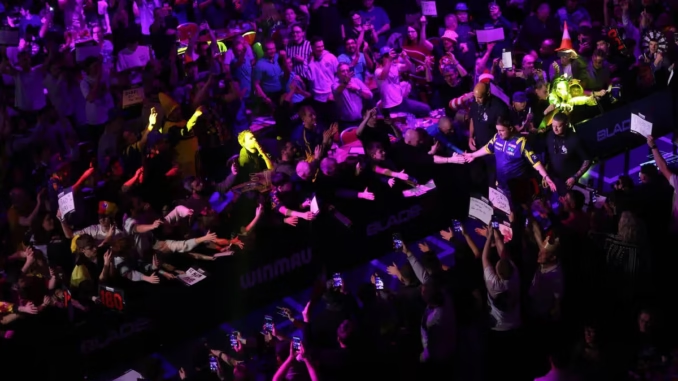
In the electrifying atmosphere of Milton Keynes’ Arena MK, the World Darts Masters final unfolded as a gripping showdown between two titans of the sport: teenage sensation Luke Littler and seasoned champion Luke Humphries. The 19-year-old Littler, already a world champion and a dominant force in major competitions, battled through a series of tough matches to reach this pinnacle event in the newly revamped tournament. Facing off against Humphries, a former world title holder known for his precision and composure under pressure, Littler emerged victorious in a nail-biting 6-5 contest that kept fans on the edge of their seats. The match showcased the raw talent and strategic brilliance that have made darts a global spectacle, with arrows flying and scores mounting in a display of skill that highlighted why these players are at the top of their game.
Yet, amid the cheers and tension of this high-stakes final, an unexpected undercurrent of discontent rippled through the crowd. Spectators, fueled by the lively and often boisterous energy typical of darts events, broke into a chant that targeted none other than the British Prime Minister. To the familiar riff of the White Stripes’ iconic 2003 hit “Seven Nation Army,” the audience repeatedly belted out, “Keir Starmer’s a w****r.” The chant echoed around the venue on multiple occasions, cutting through the excitement and forcing the broadcaster into a swift response. During the fourth set, as the match intensified, ITV displayed a message on screen that read: “We apologise for any offensive language.” Viewers at home noted how the network attempted to mitigate the impact by overlaying generic crowd noise, a tactic to drown out the derogatory refrain and maintain the family-friendly tone of the broadcast.
This incident was far from isolated, reflecting a growing pattern of public expression at sporting events. Darts fans, known for their passionate and unfiltered support, have previously voiced similar sentiments. Just months earlier, at the World Grand Prix, the same explicit chant disrupted a match between Danny Noppert and Stephen Bunting. Broadcasters at the time opted to mask the audio with artificial crowd sounds to prevent it from reaching living rooms across the nation. The trend continued at the prestigious World Darts Championship final, where, only a few legs into the blockbuster clash between Littler and Gian van Veen, the chant erupted once more. Again, efforts were made to suppress it, underscoring the challenges faced by live sports coverage in handling spontaneous crowd behavior.
The phenomenon isn’t confined to the oche; it has spilled over into other arenas of British sport. Football supporters, for instance, joined in during England’s convincing 3-0 victory over Wales at Wembley Stadium in October. The chant rang out clearly amid the celebrations, highlighting how such expressions of frustration are transcending individual sports and tapping into broader societal moods. These moments capture the unique intersection of sport and politics, where the anonymity of a crowd allows for raw, unscripted commentary on public figures.
At the heart of this recurring mockery lies a deeper narrative of political disillusionment. Recent surveys paint a stark picture of the Prime Minister’s standing with the electorate. His net satisfaction rating has plummeted to a historic low of -49, a figure that signals widespread dissatisfaction. More than half of those polled have expressed a desire for new leadership within the Labour Party, even among those who voted for the party in the 2024 General Election, where the net satisfaction score among supporters has dipped to -9. This erosion of support comes amid economic challenges, policy debates, and shifting public priorities that have tested the government’s early tenure.
When asked about potential successors, respondents showed a clear preference for alternatives outside the immediate Westminster bubble. Andy Burnham, the Mayor of Greater Manchester, emerged as the frontrunner with 24 percent backing from those seeking change. His appeal cuts across party lines, drawing support from disaffected Labour voters and even some who shifted to other parties like Reform in recent elections. Other figures, such as Health Secretary Wes Streeting and former deputy Angela Rayner, garnered minimal support at just four percent each, while a significant 23 percent opted for “none of the above,” indicating uncertainty about the path forward. These findings, gathered in early 2026, suggest a volatile political landscape where public sentiment can manifest in unexpected ways, from ballot boxes to bustling sports venues.
The darts final itself, despite the distractions, remained a testament to the sport’s enduring appeal. Littler’s triumph not only solidified his status as a prodigy but also promised more thrilling rivalries ahead. Humphries, gracious in defeat, acknowledged the intensity of the match, praising his opponent’s resilience. As the crowd’s energy ebbed and flowed, blending cheers for the players with pointed jabs at figures beyond the stage, it served as a reminder of how sports arenas can become microcosms of national conversations. In the end, while the chants may have stolen headlines, the true spotlight belonged to the arrows and the athletes who wield them with such mastery. This event, like those before it, underscores the unpredictable nature of live sport—where skill, spectacle, and society collide in ways that keep audiences coming back for more.
We live in a country that is meant to have freedom of speech, and people should be allowed to express their opinions. Just because it’s not what certain people might want to hear, is no reason to have it shut down. But then the tv companies are so woke now i’m surprised they don’t hold up cards to let the crowd know what they are allowed to say.