
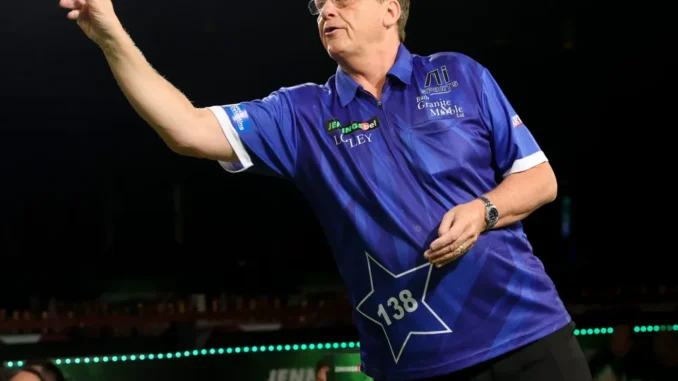
Keith Deller, the 1983 world darts champion, has sparked fresh debate in the sport by calling for Germany to lose some of its major PDC events due to repeated problems with disruptive whistling from sections of the crowd. The former champion believes the partisan atmosphere in German venues has crossed a line too many times, distracting players at crucial moments and undermining the integrity of high-level matches.
Deller’s strong stance comes hot on the heels of yet another high-profile incident at the European Darts Grand Prix in Sindelfingen. During the second-round clash between Dave Chisnall and Gerwyn Price inside the Glaspalast arena, persistent whistling and jeering threatened to overshadow the contest. With Chisnall holding a narrow 3-2 lead, the noise became so intrusive that referee Huw Ware felt compelled to step in dramatically.
Ware marched to the edge of the stage, dropped to one knee, and issued a stern warning directly to security. “Ladies and Gentlemen I just told security if you carry on whistling please do, but you’ll be thrown out the venue immediately!” His message was crystal clear and left no room for misinterpretation. The intervention highlighted growing frustration among officials and players alike with a small but vocal minority of fans whose whistling often targets opponents at the worst possible times, such as when they are throwing for a double or lining up a big finish.
This was not an isolated event. Earlier in the year, at the European Darts Trophy in Göttingen, the same referee had to intervene during a tense match between Stephen Bunting and home player Niko Springer. In that crucial final-leg decider, Ware pleaded with the crowd, saying, “I’ve asked politely once and I’ll say it politely, shut up please. We’re trying to have a game of darts up here, make this sound better please.” Bunting later admitted the constant whistling left him “really hurt” and spoiled what should have been an enjoyable contest, despite his respect for his opponent.
The issue has simmered for some time and gained wider attention when reigning world champion Luke Littler publicly voiced his reluctance to play in Germany. Littler has skipped certain events there, citing hostile receptions that included booing and whistling, and stated he would not return until the European Championship in October. Other top players have echoed similar sentiments. Stephen Bunting, reflecting on his own experience, said he now understood Littler’s position better after encountering the whistling firsthand. “The whistling when you’re throwing for a double, when you’re travelling all that way to go over there, I understand now why Luke Littler doesn’t want to go over there,” Bunting remarked, adding that it was the first time he had experienced it so intensely.
Nathan Aspinall, fresh from his own success on the European Tour, has also weighed in on the broader problem of whistling at darts events. He previously suggested that fans caught whistling should face serious consequences, such as a lengthy ban, to deter others from copying the behaviour. “I think the people that get caught shouldn’t just get kicked out, they should get banned for say five years,” Aspinall proposed, reflecting a growing call for stricter measures to protect the quality of the sport.
Germany has long been a powerhouse for darts, with passionate crowds packing venues and helping to grow the game across Europe. Events like the German Darts Grand Prix and the European Championship regularly draw huge audiences and create an electric atmosphere that many players enjoy. Home favorites such as Martin Schindler often receive thunderous support, which adds to the spectacle. However, Deller argues that when this passion tips into deliberate disruption aimed at unsettling visiting players, it becomes unacceptable.
The 1983 world champion, who knows firsthand the pressure of performing on the biggest stages, believes the PDC should consider reducing the number of major tournaments hosted in Germany until the situation improves. He feels that repeated failures to curb the whistling are harming the sport’s reputation and could discourage top talents from competing there. Deller’s comments reflect a wider concern that without stronger action from organizers, security teams, and local authorities, the problem will only worsen as the sport continues its global boom.
Referees like Huw Ware have shown they are prepared to act decisively, but many in the darts community argue that more needs to be done at an organizational level. Suggestions range from increased security presence and clearer pre-event warnings to potential bans for repeat offenders. Some fans and players point out that while loud cheering and chanting are part of the darts experience and add to the entertainment, targeted whistling during a player’s throw is different and can genuinely affect concentration and performance.
The debate touches on the delicate balance between creating a lively, partisan crowd and maintaining a fair playing field. Darts has thrived on its unique atmosphere, where fans sing, chant, and create walls of noise that have helped turn the sport into a mainstream phenomenon. Yet when that energy becomes disruptive, it risks alienating both players and viewers watching at home.
Deller’s call to potentially strip Germany of some events is provocative and likely to divide opinion. Supporters of his view argue that player welfare and the quality of competition must come first. Critics might counter that Germany remains one of the strongest markets for darts, with dedicated supporters who help fill arenas and boost prize funds. They suggest that education, better stewarding, and stricter in-venue enforcement could solve the issue without reducing the calendar.
As the PDC looks ahead to a packed schedule of European Tour stops and major televised events, the whistling controversy is unlikely to fade quietly. Players continue to travel long distances and prepare meticulously for these tournaments, only to face unnecessary distractions that can swing the outcome of crucial legs. With stars like Littler, Bunting, Aspinall, and Price all expressing varying degrees of frustration, the governing body faces pressure to find a lasting solution.
In the meantime, incidents like Ware’s no-nonsense intervention serve as a reminder that officials are watching closely. Whether Deller’s bold suggestion gains traction or prompts improved crowd management remains to be seen, but one thing is clear: the darts world is united in wanting the focus to stay on the skill and drama on the oche rather than unnecessary noise off it. The sport’s continued growth depends on preserving the vibrant atmosphere that makes it special while ensuring it does not come at the expense of fair play and player enjoyment.
For a game built on precision under pressure, even small disruptions can prove decisive. As more voices join the conversation, from former champions like Deller to current stars battling through the noise, the hope is that German events can return to being celebrated purely for their passion and high-quality darts rather than headlines about crowd trouble.
Leave a Reply