
In the electric atmosphere of a packed darts arena in Sindelfingen, Germany, the drama unfolded not just on the oche but in the stands, where a chorus of disruptive whistling threatened to derail one of the sport’s marquee clashes. It was the second round of the European Darts Grand Prix, and the matchup between England’s Dave Chisnall and Wales’ Gerwyn Price had the crowd on edge. Persistent jeers and whistles pierced the air, creating a tense backdrop that went far beyond the usual passionate support. Referee Huw Ware, no stranger to maintaining order on the big stage, stepped in decisively. He marched to the edge of the stage, dropped to one knee, and addressed security and the spectators directly, his voice cutting through the noise with unmistakable authority: “Ladies and gentlemen, I’ve just told security: if you carry on whistling, please do — but you will be removed from the venue immediately. Just so you know.”
The incident, captured on video and quickly circulating across social media, highlighted a growing frustration within the Professional Darts Corporation circuit. Fans’ behavior in German venues has increasingly drawn scrutiny, turning what should be thrilling contests into tests of concentration for the players. Amid the fallout, former world champion Keith Deller, the 1983 BDO title holder and a respected voice in the darts community, did not hold back. Taking to social media in the wake of the chaos, the 66-year-old Ipswich native delivered a pointed message that has sparked widespread debate: “They need to not have so many Euros in Germany. They don’t deserve it if this keeps happening.”
Deller’s call for fewer European Tour events on German soil stems from a pattern that has repeated itself too often. This was not an isolated episode. Just weeks earlier, at the European Darts Trophy in Göttingen, Ware found himself in a similar situation during a high-stakes deciding leg between Stephen Bunting and local hope Niko Springer. With tensions boiling over in front of a partisan home crowd known for loudly rallying behind their favorites, the referee once again intervened firmly: “I’ve asked nicely once and I’ll say it nicely again: quiet please. We’re trying to play a darts match here — make the atmosphere better.” His plea underscored a broader issue plaguing events in the country, where the blend of enthusiastic but sometimes rowdy spectators has tested the patience of officials and competitors alike.
The numbers tell a significant part of the story. Out of the 15 European Tour events on the PDC calendar, a striking six are hosted in Germany, making it a cornerstone of the tour’s European leg. Adding to that, the prestigious European Championship is set to return to Dortmund in October, further cementing the nation’s prominent role in the sport’s expansion. For years, Germany has embraced darts with open arms, contributing to the PDC’s meteoric rise from niche pub games to packed arenas and multimillion-pound prize funds. Yet Deller argues that this hospitality is being tested by recurring disruptions, suggesting the organization might need to rethink its scheduling to prioritize venues where respect for the players and the game takes precedence.
In his broader reflections, Deller acknowledged the complexities at play. He pointed out that the PDC’s success in growing the sport has brought bigger crowds and bigger paydays, but it has also introduced challenges with audiences that include casual fans out for a lively day rather than die-hard enthusiasts. “The players have to accept the situation or go back to crowds of 700 people and poor prize money,” he noted. “The PDC have done fantastic to get darts where it is today and get the money in the sport. Just smile and put the millions in the bank. Big crowds are so good financially. It’s hard to stop the whistling as a lot of people go for the day out and are not darts fans. You need big crowds to get the big prize money. Some other countries are more respectful, so maybe give them more chances.”
This perspective resonates deeply in a sport where mental focus is everything. Players step onto the stage under bright lights, facing not only elite opponents but the pressure of thousands of eyes and ears. Whistling, once a rare annoyance, has become more prevalent as arenas swell in size and the fan base diversifies. Gerwyn Price, the eventual winner of the European Darts Grand Prix, channeled the frustration into motivation, securing a hard-fought victory that many viewed as sporting revenge against the whistlers. His triumph, which marked another milestone in his decorated career, served as a reminder that while the atmosphere can be electric, it should enhance rather than hinder the competition.
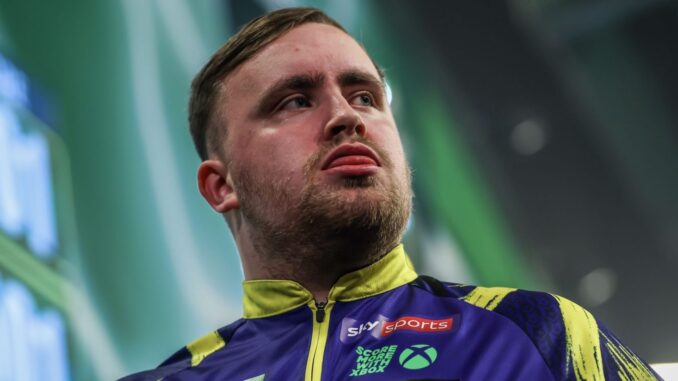
The issue extends beyond this single tournament. High-profile players have voiced similar concerns in the past. World number one Luke Littler, the prodigious talent whose meteoric rise has captivated fans worldwide, has openly struggled with the reception in Germany. He has faced booing during walk-ons and matches, including notable exits at the European Championship in Dortmund and other stops like the German Darts Grand Prix. Littler once reflected on the experience with a mix of bewilderment and honesty: “I had a little head loss moment, as some of us players do. I just don’t get it, and I can’t explain it. Obviously, you do your walk-on, but then as soon as I got on stage, I started getting booed. I got booed in Hildesheim last year against Peter Wright on the European Tour. I was flying and then they started booing me and I lost. Obviously, the Germans mustn’t like us English.” Such moments highlight how home-crowd dynamics can influence not just individual performances but the overall enjoyment of the game.
Deller’s intervention comes at a pivotal time for darts. The PDC has masterfully transformed the sport into a global spectacle, with prize money soaring and events drawing record attendance. Germany has played a vital part in that success, its venues often buzzing with energy that amplifies the drama on the board. Yet the former champion’s words invite a necessary conversation about balance. Is the current model sustainable if disruptions continue to overshadow the skill and sportsmanship on display? Should the tour explore reallocating events to nations where crowds consistently demonstrate greater decorum, fostering an environment where players can perform at their peak without unnecessary interference?
As the darts world looks ahead, these questions linger. The European Championship in Dortmund looms as another test, with its rich history and passionate following. Organizers face the challenge of preserving the vibrant atmosphere that makes darts unique while ensuring it remains fair and respectful. Players, meanwhile, continue to adapt, banking those lucrative earnings while hoping for smoother sailing in future stops. Deller’s straightforward stance may not sit well with everyone, particularly those who cherish Germany’s contribution to the circuit. But it underscores a truth that many in the sport quietly acknowledge: growth brings rewards, but it also demands responsibility from all involved.
In the end, the whistling incidents serve as a microcosm of darts’ evolution. From humble beginnings in smoke-filled halls to state-of-the-art arenas, the game has come a long way. Legends like Deller, who lived through the leaner times, offer perspective born from experience. His call for fewer events in Germany is not a dismissal of the country’s role but a plea for improvement, a reminder that the soul of the sport lies in the precision of the throw and the respect between players, officials, and fans. As the PDC continues to expand its horizons, addressing these concerns could ensure that the thunderous cheers drown out any discordant notes, keeping the focus where it belongs: on the dartboard and the athletes who make the game unforgettable. Whether the tour heeds the advice or finds another path, one thing is clear—the conversation has been ignited, and darts enthusiasts everywhere will be watching closely to see how it unfolds.
Leave a Reply