
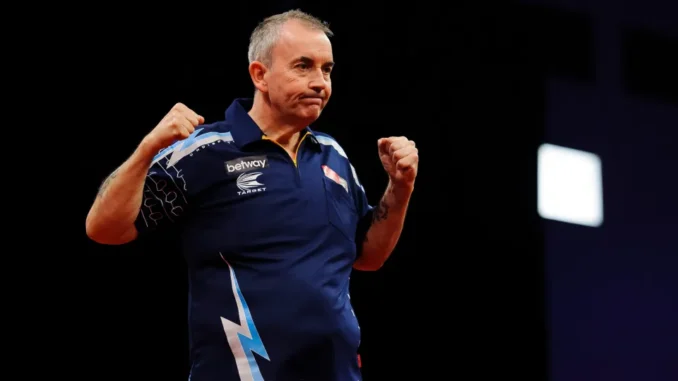
Phil Taylor has lifted the lid on one of the strangest and most frustrating moments of his legendary career, revealing how he was once hit with a massive fine for a tournament he insists he never even attended.
Taylor, widely regarded as the greatest player in darts history, is no stranger to controversy or conflict during his decades at the top. While his dominance on the oche brought him global recognition and an unmatched haul of titles, life behind the scenes was not always smooth. In a candid reflection on his career, the 16-time world champion opened up about his long-running battles with fines and disciplinary actions, offering a glimpse into a side of the sport rarely seen by fans.
According to Taylor, being fined became almost a regular occurrence at one stage of his career. He recalled periods where penalties were handed out so frequently that they started to feel routine rather than exceptional. In his own words, he was “fined every week,” a statement that underlines just how common these issues became during certain stretches of his time in professional darts.
However, one incident stood out far above the rest — not just because of the financial implications, but because of what Taylor claims was a complete mix-up. The story centers around a tournament in Germany, where he was accused of failing to fulfill his duties as a participating player. These duties typically include responsibilities such as marking matches or assisting during the event, obligations that are part of maintaining professional standards within the sport.
The problem, as Taylor tells it, is that he was not present at the tournament at all.
Despite his insistence that he had not attended the event, he was informed that he had failed to carry out required tasks and would therefore be fined. Initially, the situation may have seemed manageable, but it quickly escalated into something much more serious. The fine began to grow, and what started as a disciplinary issue turned into a full-blown dispute between Taylor and the authorities.
Faced with a punishment he believed was completely unjust, Taylor took a firm stance. He refused to accept the fine, making his position crystal clear with a blunt response: “I ain’t paying it.” That refusal marked the beginning of a tense standoff, one that would test his resolve and his relationship with those in charge of the sport.
As the disagreement dragged on, the stakes became even higher. Taylor claimed that the potential penalty increased significantly as the situation remained unresolved, raising the possibility of a substantial financial hit. Despite the mounting pressure, he did not back down. For Taylor, it was not just about the money — it was about principle.
Accepting the fine, in his view, would have meant admitting fault for something he firmly believed he had not done. That was a line he was not prepared to cross. His refusal to pay, even in the face of escalating consequences, reflects the same determination and stubbornness that defined his playing career.
The episode also shines a light on Taylor’s often complicated relationship with authority figures within darts, including influential administrators such as Barry Hearn. Throughout his career, Taylor was known for speaking his mind and challenging decisions he disagreed with, and this incident appears to fit that pattern.
While some players might have chosen to quietly accept the penalty and move on, Taylor’s approach was very different. He was willing to question the system and stand his ground, even if it meant creating tension behind the scenes. It is an attitude that earned him both admiration and criticism over the years.
Looking back, the story provides a fascinating insight into the pressures and complexities of life as a top professional darts player. Beyond the bright lights and roaring crowds, there are rules, expectations, and administrative structures that players must navigate. When those systems break down — or are perceived to — situations like this can arise.
For fans, it is a reminder that even the most successful athletes are not immune to frustration off the stage. Taylor’s career may be defined by his incredible achievements, but it also included moments of conflict and controversy that shaped his journey.
Despite these challenges, his legacy remains untouchable. With a record number of world titles and a career that spanned decades, Taylor set standards that continue to influence the sport today. His dominance redefined what was possible in darts, and his competitive mentality became the benchmark for future generations.
Stories like this only add to the mythology surrounding him. They reveal a player who was not only fiercely competitive on the oche but also unafraid to defend himself away from it. His refusal to accept what he saw as an unjust punishment speaks volumes about his character.
Even in retirement, Taylor remains an influential figure in the darts world. His opinions carry weight, and his recollections offer valuable insight into how the sport has evolved over time. Incidents like this serve as reminders of the challenges that existed during his era and the personality that helped him navigate them.
The bizarre nature of the fine — being penalized for an event he says he did not attend — ensures that this story stands out among the many anecdotes from his career. It highlights the occasional unpredictability of professional sport, where misunderstandings and disputes can escalate quickly.
Ultimately, Taylor’s stance was unwavering. He refused to pay the fine, stood by his version of events, and remained defiant in the face of mounting pressure. It is a decision that reflects the same mindset that carried him to the very top of the game — a belief in himself and a refusal to back down.
As darts continues to grow and new stars emerge, stories like this keep Taylor’s legacy alive. Not just as the greatest player of all time, but as a figure who was never afraid to challenge the system when he believed it had made a mistake.
Leave a Reply