
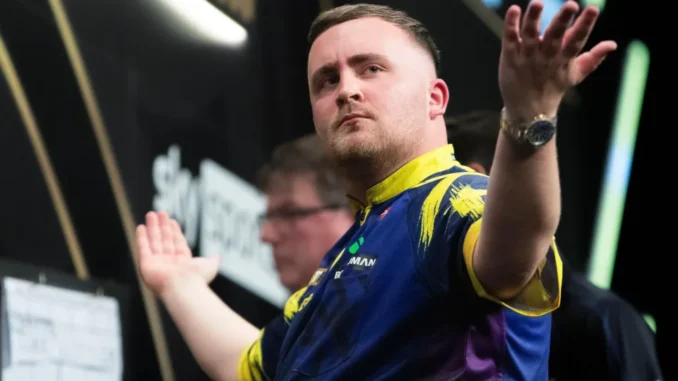
Luke Littler has revealed that he has made a major adjustment to the way he uses social media, as the teenage darts sensation continues to deal with online trolling following a recent controversy involving Gian van Veen. The decision highlights the growing pressures that come with rapid fame and the challenges young athletes face when navigating constant public scrutiny in the digital age.
Littler’s rise in professional darts has been nothing short of extraordinary. Still in his teenage years, he has gone from a relatively unknown prospect to one of the most talked-about names in the sport. His breakthrough performances on the biggest stages captured global attention, and with that attention came a massive surge in his online following. In a remarkably short period, his social media accounts grew from modest numbers to millions of followers, placing him firmly in the spotlight both on and off the oche.
However, that level of visibility has brought with it an inevitable downside. The more prominent Littler has become, the more exposed he has been to criticism, negativity, and, at times, outright abuse. The situation escalated after a tense moment involving Van Veen during a high-profile match, which sparked widespread debate among fans. What began as discussion about the incident quickly spilled over into personal commentary, with many taking to social media to share strong opinions.
As the noise intensified, Littler found himself at the center of a storm that extended far beyond the dartboard. While support from fans remained strong, the volume of negative messages became increasingly difficult to ignore. Rather than allowing the situation to affect him further, he chose to take control of his online experience in a practical and measured way.
One of the key steps Littler took was to change the settings on his social media accounts, particularly on Instagram. He disabled replies to his stories, a move that significantly reduces the number of direct messages he receives in response to his posts. This adjustment allows him to continue sharing updates with fans while limiting the potential for abusive or harmful interactions to reach him directly.
The change was not about distancing himself from supporters, but about creating a healthier environment. Littler made it clear that he still values the connection he has built with fans, but recognizes the importance of setting boundaries in order to protect his mental wellbeing. By filtering out the most toxic elements, he has been able to strike a balance between staying engaged and maintaining peace of mind.
Despite these changes, Littler admitted that he still keeps an eye on social media. Like many young athletes, he is aware of what is being said about him, but he now approaches it with a different mindset. Instead of getting caught up in every comment or reaction, he focuses on the bigger picture, understanding that online criticism often comes in waves that quickly pass.
He has pointed out that these bursts of negativity tend to last only a short time, often fading within a couple of days as attention shifts to the next topic. This perspective has helped him avoid overreacting to criticism and remain focused on what truly matters—his performance on the dartboard.
That focus is crucial at this stage of his career. Competing at the highest level requires not only skill but also mental resilience, especially when external distractions threaten to disrupt concentration. Littler’s ability to manage these pressures will play a key role in determining how far he can go in the sport.
The timing of his social media adjustment is particularly important given the intensity of the current darts calendar. With major events and weekly competitions demanding consistent performance, there is little room for distractions. Littler is determined not to let off-the-board issues interfere with his progress, and his recent actions suggest he is learning quickly how to handle the demands of professional sport.
Looking ahead, he faces another significant test as he prepares for a high-profile match against Josh Rock. The encounter adds an interesting dynamic, as the two players share a friendship away from the stage while remaining fierce competitors during matches. Balancing that relationship with the need to perform at his best is part of the challenge that comes with life at the top level.
At the same time, Littler remains focused on climbing the rankings and establishing himself as a consistent contender. The competition is fierce, with experienced players and emerging talents all vying for success. Maintaining form over a long season requires discipline, adaptability, and the ability to stay mentally strong in the face of both praise and criticism.
The issue of online trolling is not unique to Littler, but his experience highlights how quickly it can escalate, particularly for young athletes who find themselves thrust into the spotlight. Social media offers incredible opportunities for connection and growth, but it also exposes individuals to a level of scrutiny that can be difficult to manage.
By taking proactive steps to control his online environment, Littler is demonstrating a level of maturity that goes beyond his years. Rather than reacting emotionally or withdrawing completely, he has chosen a balanced approach that allows him to remain connected while protecting himself from unnecessary negativity.
Importantly, his decision does not signal a retreat from the public eye. He continues to share moments from his career, celebrate achievements, and interact with supporters in a positive way. The changes he has made are about ensuring that social media remains a tool that works for him, rather than something that becomes overwhelming.
As his career continues to develop, these experiences are likely to shape how he handles the pressures of fame. Learning to deal with criticism, manage expectations, and maintain focus are all essential skills for any athlete aiming to succeed at the highest level. Littler’s willingness to adapt suggests he is well aware of what is required.
For now, his priority remains clear. By limiting exposure to online abuse and keeping his attention on his game, he is giving himself the best possible platform to continue his rise. The challenges of modern sport extend far beyond competition, but Littler’s response shows that he is prepared to face them head-on.
In the end, his decision to change his social media settings may seem like a small adjustment, but it carries significant meaning. It reflects an understanding of the importance of mental wellbeing and the need to establish boundaries in an increasingly connected world. And as he continues to perform on the biggest stages, that awareness could prove just as valuable as his undeniable talent.
Leave a Reply