
In the modern era of professional darts, few sports blend raw emotion, relentless pressure, and public scrutiny quite like the PDC circuit. Packed arenas, deafening walk-on music, and millions watching around the world have transformed darts into one of the fastest-growing sports on the planet. But with that growth has come a new reality for players: the spotlight never truly switches off.
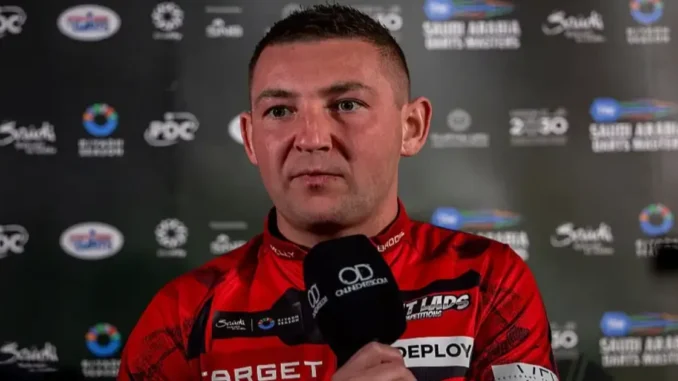
For Nathan Aspinall, one of the sport’s most respected and battle-tested competitors, that reality became especially clear when discussing fellow superstar Luke Humphries. In a brutally honest and surprisingly emotional conversation, Aspinall revealed that many casual fans—and even some of his own friends—simply do not like the world number one. Yet, according to “The Asp,” the criticism aimed at Humphries could not be further from the truth.
Aspinall, a two-time televised major champion and one of the most popular figures in darts, has built his reputation on authenticity. The Stockport thrower has never hidden his struggles, whether financial hardships before making it professionally, the anxiety that comes with elite competition, or his ongoing battles with injury and dartitis. Fans connect with him because he speaks openly and wears his emotions on his sleeve.
That honesty was on full display when he passionately defended Humphries against what he believes is unfair treatment from sections of the darts community.
“He is an absolute credit to the sport. It’s disgusting,” Aspinall said when discussing the online abuse and negativity Humphries has received over recent months.
The comments came at a fascinating moment in the Premier League Darts season. Aspinall had just enjoyed a memorable night on home soil in Manchester, producing a brilliant display to defeat Humphries in the final in front of a packed and electric crowd. The atmosphere inside the arena was everything fans have come to expect from modern darts—thousands chanting, lights flashing across the stage, and tension hanging over every visit to the board.
Despite overcoming Humphries in the final, Aspinall immediately shifted focus away from the result and toward the criticism directed at the reigning world champion.
Luke Humphries has become one of the defining players of this generation. Nicknamed “Cool Hand Luke,” he has risen from promising talent to the dominant force in world darts through consistency, composure, and extraordinary mental strength. Over the last few years, he has collected major titles at an astonishing rate and climbed to the very top of the rankings.
Yet for all his success, Humphries has often found himself facing a strange disconnect with certain fans.
Some admire his calm, methodical style and professionalism. Others, however, seem unable to warm to him. His reserved personality, particularly compared to some of the sport’s louder and more flamboyant stars, has led to criticism that Aspinall clearly struggles to understand.
What made the conversation even more revealing was Aspinall’s admission that the negative feelings toward Humphries extend into his own friendship group.
“You know what, I have a lot of mates that love darts, and no one likes Luke,” Aspinall admitted. “Honestly, I can’t give you that answer. A lot of my mates can’t stand him. I don’t know what it is.”
The honesty of the statement stunned many fans because Aspinall himself appears genuinely baffled by the hostility. He suggested that Humphries’ relentless success could be part of the issue, with jealousy perhaps playing a role among supporters who prefer more explosive personalities or underdog stories.
But Aspinall insisted the perception completely changes once people actually spend time with Humphries away from the stage.
He recalled a recent trip to Berlin where two friends who had strongly disliked Humphries completely changed their minds after meeting him socially.
“There were two lads who came away with me to Berlin last week, who both hated Luke,” Aspinall explained. “We had a few beers in a hotel bar after, and they went, ‘I need to apologise to you, I didn’t like you, but you’re a great lad and that’s it.’”
For Aspinall, that experience perfectly captured the problem. Fans see a composed competitor under the bright lights and assume they understand the person behind the player. But according to him, the real Humphries is humble, approachable, and deeply grounded despite everything he has achieved.
“People don’t know him,” Aspinall continued. “People don’t know the real people. I just don’t understand it, and you know, hopefully, it will change at some point, because he’s a great guy.”
The comments also touched on a much wider conversation within professional darts about mental health and the pressures placed on players in today’s game.
Humphries himself has been open about the emotional strain of the sport. In recent months, he spoke candidly about how the relentless schedule of tournaments, travel, media duties, and expectations can become overwhelming. His honesty sparked huge debate online, with some fans sympathizing while others criticized him for speaking out despite his success.
Aspinall clearly believes that reaction was unfair.
As someone who has experienced his own personal and professional struggles, he understands better than most how difficult life on the circuit can become. The glamorous image seen on television often hides the exhausting reality behind the scenes—constant flights, hotel rooms, pressure to perform every night, and scrutiny from fans on social media after every missed double or disappointing result.
Professional darts players now live in a world where every comment, facial expression, and interview can be dissected online within seconds. The rise of young sensations like Luke Littler has only increased attention on the sport, bringing in millions of new viewers and amplifying discussions across social media platforms.
In that environment, personalities are judged as quickly as performances.
Humphries’ cool, focused demeanor has often been mistaken for arrogance or detachment by some viewers. Unlike players who thrive on crowd interaction and emotional celebrations, Humphries tends to stay composed and concentrated during matches. But those who know him personally, according to Aspinall, see a completely different side.
It is one of the reasons Aspinall felt compelled to speak publicly in his defense.
The respect between the two players also highlights the strong sense of camaraderie that still exists within professional darts, even amid fierce competition. On stage, Aspinall and Humphries are rivals battling for titles, rankings, and huge prize money. Off stage, there remains a shared understanding of the sacrifices required to compete at the highest level.
That bond is something fans do not always see.
Aspinall’s passionate defense of Humphries ultimately served as more than just support for a friend. It became a reminder that professional athletes are human beings first. Behind the walk-ons, trophies, and television cameras are individuals dealing with pressure, expectations, criticism, and personal struggles just like anyone else.
As darts continues to grow into a global entertainment phenomenon, stories like this feel increasingly important. The sport’s stars are no longer just competitors throwing arrows—they are personalities living under constant public attention.
And according to Nathan Aspinall, perhaps all it takes to change opinions about Luke Humphries is sharing a conversation, a few laughs, and a drink away from the noise of the arena.
Leave a Reply