
The electrifying atmosphere that usually defines Premier League Darts nights has recently been overshadowed by growing concerns over crowd behaviour, prompting an official response from the Professional Darts Corporation. What should have been another showcase of elite competition instead turned into a talking point for the wrong reasons during a recent evening in Glasgow, where persistent whistling, booing, and general disruption left several top players visibly frustrated.
At the centre of the storm was teenage sensation Luke Littler, whose rapid rise has made him one of the most watched and talked about figures in the sport. Known for his fearless scoring and calm finishing under pressure, Littler has quickly become a major attraction on the Premier League circuit. Every appearance draws huge attention, and expectations are always high whenever he steps onto the oche. But in Glasgow, attention shifted away from darts quality and towards the behaviour of sections of the crowd.
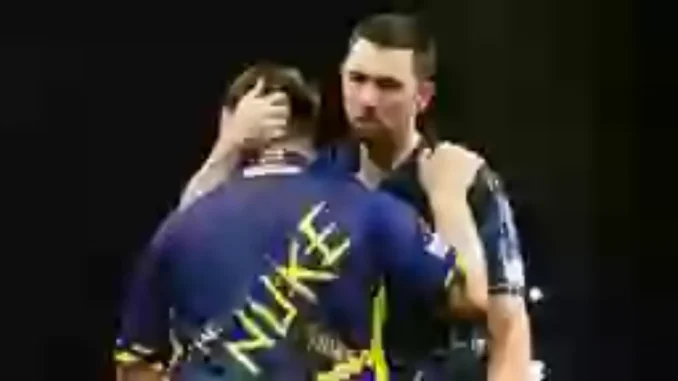
Throughout the night, multiple matches were affected by repeated interruptions from spectators. Whistling during throws, booing at crucial moments, and general noise during players’ routines created an environment that many felt crossed the line from passionate support into outright disruption. The issue became especially noticeable during the high-pressure final between Littler and world number one Luke Humphries, a match that was expected to be a showcase of precision and nerve but instead became a test of composure under difficult conditions.
Even experienced professionals were visibly affected. Gerwyn Price, no stranger to hostile atmospheres, reacted in frustration during his match, at one point responding to the crowd with whistling of his own in an attempt to counter the disruption. Rob Cross also found himself impacted, with key darts being met by boos during his tightly contested game against Littler. The atmosphere, rather than building excitement, appeared to interfere with concentration and rhythm across several matches.
Despite the chaos, Littler managed to secure a hard-fought victory, but he did not hold back in his post-match assessment of what unfolded. Speaking openly, he criticised the behaviour of certain fans and also questioned how the situation was handled during play. He pointed to specific moments where intervention from the referee, instead of calming the crowd, appeared to make things worse.
“There was a few in particular that were doing it when Luke was throwing,” Littler explained, referring to the interruptions during Humphries’ darts. He went on to describe a key turning point in the match where official intervention may have backfired. According to Littler, attempts to quiet the crowd only intensified the noise. “Kirk told them to be quiet and it got even worse, and then I missed doubles and Luke breaks at 5-4. I’m just like, ‘Kirk, you’ve made it worse for me there, I’m 5-4 down,’” he added.
Even with that setback, Littler showed the resilience that has become a trademark of his young career. He quickly regrouped, broke back immediately, and held his throw under pressure to eventually close out the match. His reaction after the game highlighted a broader issue in modern darts: how officials balance crowd control without unintentionally increasing tension or distracting players further.
In response to the growing criticism, the Professional Darts Corporation issued a firm and detailed statement addressing the situation. The governing body made it clear that it does not condone disruptive behaviour of any kind, particularly during player throws when concentration is at its most critical. It reminded spectators that darts players perform in front of sold-out arenas with the expectation of respect, allowing them to deliver their best possible performance.
The organisation also highlighted that such behaviour violates event conditions and can lead to removal from venues. It stressed that responsibility does not rest solely with officials on stage but also with venue security teams, who are expected to take stronger and more proactive measures in dealing with individuals who disrupt play.
Importantly, the PDC noted that the vast majority of darts fans behave appropriately and contribute positively to the sport’s famous atmosphere. The issue, it emphasised, comes from a minority whose actions risk damaging the reputation of events and affecting player performance. The governing body stated its intention to work closely with venues across the Premier League to ensure quicker and more decisive action is taken when necessary.
The Glasgow incident is not an isolated case. Similar disruptions have been reported at other stops on the Premier League tour, including Leeds, where crowd interference also became a talking point. There were also reports earlier in the season involving incidents of objects being thrown in the direction of players’ families, further intensifying concerns about behaviour inside arenas.
These repeated issues have sparked wider debate within the darts community about how the sport’s audience is evolving. Darts has long been known for its lively, vocal, and sometimes chaotic crowds, which many argue add to its unique appeal. However, there is now growing concern that certain sections of the audience are pushing beyond acceptable limits, turning supportive energy into distraction that directly affects competitive fairness.
For players, the issue is not about removing atmosphere but about maintaining balance. They thrive on energy, chants, and engagement, but not when it interferes with concentration during critical moments. The Premier League format, with its high-pressure games and packed arenas, makes players particularly sensitive to external noise.
The PDC’s swift and strong response signals its intent to protect both the integrity of the competition and the welfare of its players. Moving forward, the effectiveness of stricter crowd management will be closely watched by fans, players, and officials alike. The challenge now is finding a way to preserve the vibrant, unique identity of darts crowds while ensuring that respect for players remains non-negotiable.
As the Premier League season continues, attention will not only be on the scoreboard but also on the stands. The hope within the sport is that lessons from Glasgow will lead to a better balance, allowing darts to remain both an intense sporting contest and an entertaining spectacle without crossing the line into disruption.
Leave a Reply