
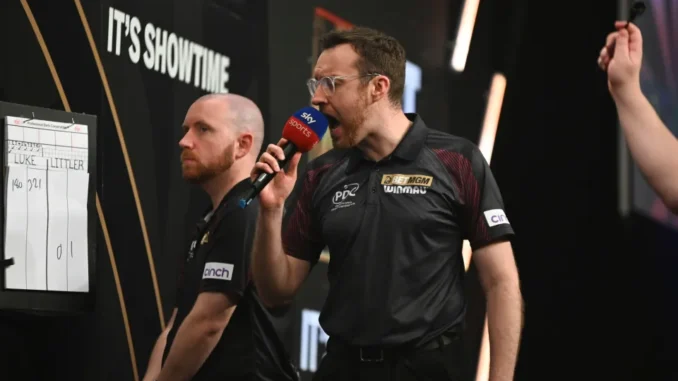
The atmosphere inside the Glaspalast arena in Sindelfingen, Germany, crackled with electric tension during the second round of the European Darts Grand Prix. What should have been a pure showcase of elite skill between two heavyweights of the PDC circuit nearly descended into chaos as persistent whistling and jeering from sections of the partisan crowd threatened to derail the contest. In the midst of it all, referee Huw Ware stepped forward with unyielding authority, delivering a dramatic intervention that sent a clear message to anyone intent on disrupting the action.
The blockbuster clash pitted Dave Chisnall against Gerwyn Price, a matchup loaded with competitive fire. At the time of the disruption, Chisnall held a slender 3-2 advantage, and the noise levels were rising sharply. Whistling echoed through the venue at critical moments, creating an unwelcome distraction that pulled focus away from the precision throwing unfolding on stage. Ware, one of the PDC’s most respected officials, had seen enough. He marched purposefully to the edge of the stage, dropped to one knee for emphasis, and addressed security with a firm, unmistakable warning that reverberated across the arena.
“Ladies and Gentlemen I just told security if you carry on whistling please do, but you’ll be thrown out the venue immediately!” Ware declared, his voice cutting through the din with crystal clarity. The savage threat left little room for interpretation. It was a bold stand, delivered without hesitation, aimed at restoring order so the players could concentrate on delivering the high-level darts that fans had come to witness. The referee quickly returned to his position, and the match resumed, but the moment had already etched itself into the tournament’s narrative as another example of crowd behavior testing the boundaries of sportsmanship in darts.
Price ultimately powered through the fiery encounter, rallying to secure a 6-4 victory over Chisnall. The Welshman produced a superb performance, posting an average of 99.71 and firing five maximum 180s along the way. He described the contest as intense and competitive, reflecting the pressure cooker environment inside the German venue. For Chisnall, the defeat stung, but the real story of the night centered on the battle to keep the focus where it belonged, on the oche rather than the stands.
Huw Ware’s intervention was no isolated outburst but rather the latest chapter in his reputation for taking decisive action against unruly elements in the crowd. Just weeks earlier, during the European Darts Trophy in Göttingen, he had faced a similar situation in a second-round match between Stephen Bunting and local favorite Niko Springer. In that deciding-leg thriller, Ware had paused proceedings to issue a pointed plea. “I’ve asked politely once and I’ll say it politely, shut up please. We’re trying to have a game of darts up here, make this sound better please,” he had urged the audience. His calm yet firm approach helped steady the ship then, much as his stronger threat did now in Sindelfingen.
These incidents highlight a growing challenge for the PDC on European soil, where passionate home crowds often bring incredible energy but sometimes cross into disruptive territory. German venues have a history of vocal support that can border on hostility toward non-local players, turning what should be celebratory occasions into tests of mental resilience for the athletes. Whistling, in particular, has emerged as a recurring nuisance, capable of timing itself with players’ throwing routines and breaking concentration at the worst possible moments. While booing and cheering are longstanding parts of the darts pantomime, the phantom whistles that appear without clear provocation have drawn increasing criticism from players and officials alike.
The broader context of crowd behavior in darts has been under scrutiny for some time. Earlier in the year, similar issues plagued Premier League nights, prompting warnings from the PDC and even prompting top stars to speak out. Luke Littler, the teenage world number one, has frequently found himself on the receiving end of boos and whistles, especially in away territories like the Netherlands and parts of Germany. He has handled the hostility with remarkable composure, often acknowledging it while insisting it does not derail his focus. “Exactly what I expected, the boos and whistles, but I knew as soon as I got on stage I could do my job,” Littler remarked after one such hostile reception. His maturity in the face of adversity stands in contrast to the minority whose actions risk spoiling the spectacle for everyone.
Stephen Bunting, who experienced the Göttingen disruption firsthand, expressed deep frustration afterward. He admitted feeling “really hurt” by the way a small section of rowdy fans had “destroyed” the match. Bunting emphasized that booing or whistling at key moments crosses a line of acceptability. “To boo and whistle at important times through any match isn’t acceptable and if you want to do that then go to a football match,” he stated, underscoring the need for respect toward the professionals who entertain millions.
Ware’s latest stand reinforces the PDC’s commitment to protecting the integrity of the game. Referees like him serve not only as scorekeepers and rule enforcers but also as guardians of fair play, willing to confront issues head-on when necessary. His actions in Sindelfingen earned praise from many observers for nipping potential escalation in the bud without halting the match for long. The tournament continued its thrilling pace, with other standout performances lighting up the Glaspalast, including strong showings from stars like Michael van Gerwen and rising talents navigating the knockout stages.
Darts has experienced explosive global growth in recent years, fueled by charismatic players, massive prize funds, and passionate audiences. Events like the European Darts Grand Prix, running from April 17 to 19 in 2026, draw thousands of fans eager for drama and excellence. Yet this popularity brings the responsibility to maintain standards. Persistent disruptions risk alienating casual viewers and frustrating the athletes whose skill and dedication make the sport so compelling. The PDC has reiterated in the past that it does not condone behavior that interferes with play, and interventions like Ware’s serve as a practical enforcement of that stance.
For Gerwyn Price, advancing after the gritty win against Chisnall set up further challenges in the latter stages. His ability to block out the external noise and deliver under pressure exemplified the mental fortitude required at this level. Chisnall, known for his consistent scoring power, pushed hard but ultimately fell short on this occasion. Both men contributed to what remained a high-quality contest once the whistling subsided, proving that the best response to crowd interference is often the players’ focus and talent shining through.
As the European Tour progresses, questions linger about how best to balance vibrant atmospheres with respectful conduct. Many fans argue that the unique energy of darts crowds, complete with chants and cheers, is part of the appeal. The minority engaging in targeted whistling, however, undermines that enjoyment for all. Officials, players, and governing bodies continue to explore solutions, from clearer pre-event messaging to stricter security protocols. Ware’s no-nonsense approach offers a model for immediate control, showing that a well-timed, authoritative warning can restore calm effectively.
In the end, the dramatic scenes at the European Darts Grand Prix served as a reminder of darts’ dual nature: a sport of pinpoint accuracy and raw emotion, played out in front of lively audiences whose passion can both elevate and occasionally test the occasion. Huw Ware’s savage threat ensured the focus returned to where it mattered most, on the thrilling battle between Chisnall and Price. As the tournament unfolded further, with more matches delivering fireworks on the board, the hope remains that future events will be remembered primarily for the darts rather than the distractions surrounding them.
The Glaspalast crowd, for the most part, delivered the enthusiastic support that makes European Tour stops so memorable. It is that very passion which has helped propel darts to new heights internationally. By addressing the problematic elements swiftly and decisively, referees like Ware help safeguard the sport’s reputation and ensure that the stars of the show, the players, can perform without unnecessary hindrance. The incident may have added an edge of drama to the day, but it also highlighted the ongoing evolution of crowd management in a sport that continues to captivate millions around the world.
With the European Darts Grand Prix showcasing top talent and competitive depth, moments like Ware’s intervention become part of the rich tapestry of stories that define each event. They spark conversation, prompt reflection on fan behavior, and ultimately reinforce the values of respect and sportsmanship that underpin the game’s enduring appeal. As players prepare for the next rounds and fans reflect on the thrills witnessed, the clear message from the referee’s stand resonates: the beautiful game of darts deserves an environment where skill, not disruption, takes center stage.
Leave a Reply