
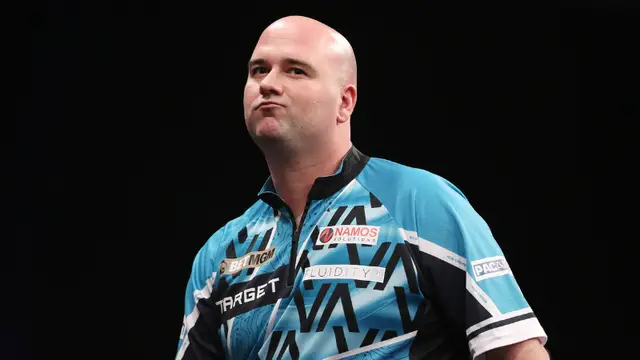
The career of Rob Cross, the 2018 PDC World Darts Champion, has taken an unexpected and challenging turn, one that stretches well beyond his performances on the oche. Widely known by his nickname “Voltage,” a reference to his former profession as an electrician, Cross has recently found himself at the center of a serious financial issue that has resulted in a five-year ban from acting as a company director. The disqualification, which runs until June 2030, highlights the strict legal expectations placed on individuals who operate limited companies, regardless of their public profile or success in sport.
The situation stems from the collapse of Rob Cross Darts Limited, a company he set up in May 2017 at a pivotal moment in his career. At the time, Cross was rapidly rising through the ranks of professional darts, earning significant prize money and attracting lucrative sponsorship deals. The company was intended to manage and streamline these earnings efficiently. However, despite the promising beginnings, the business ultimately failed to meet its financial responsibilities, leading to serious consequences.
By late 2023, the company had entered insolvent liquidation, revealing substantial unpaid tax liabilities. Reports showed that more than £450,000 was owed in combined corporation tax, VAT, and PAYE contributions. This significant shortfall immediately drew the attention of authorities, prompting a detailed investigation by the Insolvency Service. What followed was a thorough examination of the company’s financial activities over several years, uncovering a pattern of mismanagement that proved damaging both to creditors and to Cross’s professional standing.
Between March 2020 and November 2023, the company received over £1 million in income. During that same period, Cross authorized withdrawals exceeding £300,000, funds that investigators determined should have been set aside to pay creditors. A large portion of this money was owed to HM Revenue and Customs (HMRC), the UK’s tax authority. By the time liquidation began, Cross’s director’s loan account had also become significantly overdrawn, exceeding £423,000. These actions were ultimately classified as misconduct, as they placed creditors—particularly HMRC—at a disadvantage and deprived the public purse of substantial funds.
The consequences of these findings have been severe. The five-year director disqualification means Cross is legally prohibited from being involved in the creation, management, or promotion of any company without explicit court approval. For someone who relied on a corporate structure to manage his professional earnings, this restriction represents a major professional setback.
In addition to the ban, Cross has entered into an Individual Voluntary Arrangement (IVA), a formal agreement that allows him to repay his debts over time. This arrangement requires him to commit a portion of his future earnings from darts toward settling what he owes. While it enables him to avoid more extreme measures such as bankruptcy, it also places him under strict financial discipline for the foreseeable future.
Cross has spoken openly about the situation, acknowledging that it represents one of the most difficult periods of his life. He admitted that the ordeal has been ongoing for around two years, describing it as both complex and emotionally draining. Despite the damage to his reputation, he has expressed a willingness to take responsibility and make amends. He emphasized that his focus now is on correcting past mistakes, meeting his financial obligations, and continuing his career in professional darts.
From a broader perspective, the case has prompted strong reactions from officials. Representatives from the Insolvency Service have stressed the importance of directors fulfilling their tax obligations, pointing out that unpaid taxes directly affect funding for essential public services such as healthcare, education, infrastructure, and national defense. The message from authorities has been clear: no individual, regardless of fame or success, is exempt from the rules governing corporate responsibility. Ensuring compliance is essential not only for fairness but also for maintaining trust in the system and preventing businesses from gaining an unfair advantage over those that operate within the law.
For Cross, the timing of this setback is particularly significant given the remarkable nature of his rise in the sport. His journey from amateur player to world champion in just over a year remains one of the most compelling stories in darts history. That rapid ascent brought both financial rewards and increased scrutiny, making the management of his earnings all the more critical. Unfortunately, the failure to handle those responsibilities effectively has now become a defining chapter in his career.
Despite these challenges, Cross continues to compete on the professional circuit. Balancing the pressures of elite competition with the demands of his repayment plan is no small task, but it reflects his determination to move forward. His performances on the stage will now be viewed alongside his efforts to rebuild his financial standing and restore trust.
Ultimately, this situation serves as a cautionary tale, not just for athletes but for anyone managing a personal service company. Success in one field does not automatically translate to expertise in financial or corporate governance. The obligations of a company director—particularly the duty to prioritize creditors and maintain accurate tax compliance—are strict and unforgiving. When those responsibilities are neglected, the consequences can be far-reaching and long-lasting.
As Cross continues his journey, both fans and observers will be watching closely. His story is no longer just about darts titles and tournament victories; it is also about accountability, resilience, and the effort to recover from a significant professional setback.
Leave a Reply